Safety first. The following information is for educational purposes. CNC machining involves high-speed rotating cutters. Always wear eye and ear protection, never leave a running machine unattended, and verify all feeds and speeds for your specific setup.
Roughing and finishing toolpaths do opposite jobs: roughing removes material as fast as the machine and bit allow, while finishing makes the surface accurate and clean with a light, even pass that removes just the 0.2 to 0.5 mm of skin the rougher left behind. The single most useful habit you can build in CAM is treating them as two separate operations with two separate tools and two separate mindsets — on the hobby machines I run, that split is worth more than any rigidity upgrade.
The reason comes down to deflection. A hobby gantry flexes under load, and a heavy cut deflects the tool away from the wall. If your one-and-only pass is also your finish pass, that deflection is baked into the part. Rough heavy, finish light, and the finishing tool sees almost no load — so it goes exactly where the G-code says. This guide is part of the CAM toolpath mastery hub.
What a Roughing Toolpath Actually Does
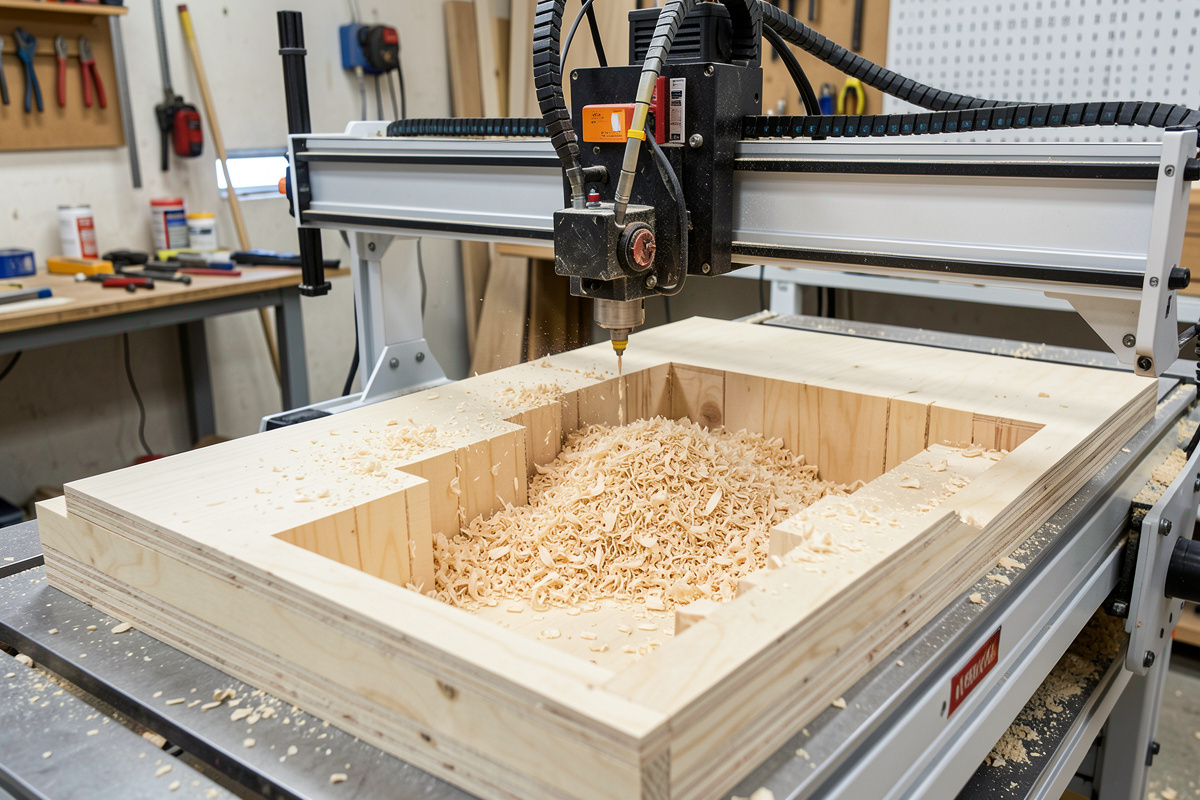
A roughing toolpath has one goal: clear the bulk and leave an even allowance of material — the “stock to leave” — for finishing. Speed matters, surface finish does not, and the marks the rougher leaves are irrelevant because the finish pass erases them. I rough with the biggest tool that fits the smallest internal radius, because a 1/4 inch bit clears stock far faster than a 1/8 inch one and deflects less doing it.
The numbers I run for roughing: a step-over of 40 to 50 percent of tool diameter for conventional pocketing, or 10 to 15 percent with a deep step-down for adaptive clearing. I leave 0.2 mm to 0.5 mm of radial stock on walls and often zero on the floor. The key word is “even” — a roughing pass that leaves 0.1 mm in one spot and 0.6 mm in another hands the finishing tool a varying load, and varying load means varying deflection means a wavy wall. Adaptive clearing leaves the most even allowance, which is covered in the adaptive and trochoidal clearing guide.
What a Finishing Toolpath Actually Does
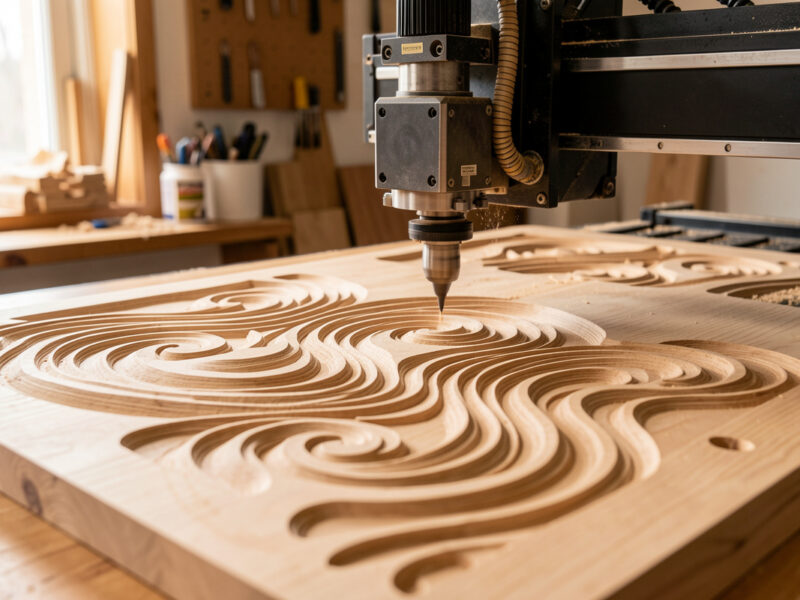
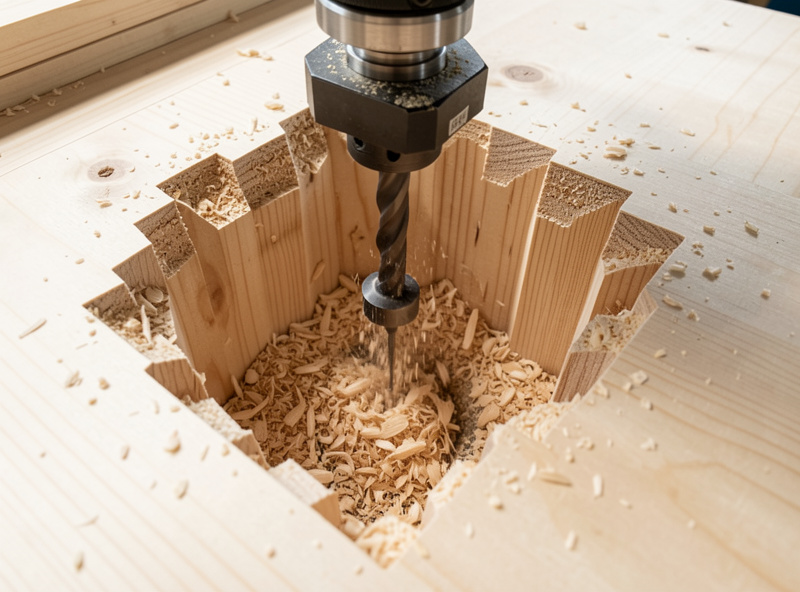
A finishing toolpath takes a light, consistent cut to produce the final dimension and surface. Because it only removes the thin skin the rougher left, it can run a small step-over and a high feed without overloading anything — the tool is barely working, so it tracks true. For vertical walls I use a contour (profile) pass; for floors a facing pass; for curved surfaces a ball-nose with parallel or scallop strategy, detailed in the 3D parallel and scallop guide.
Finish quality lives in two settings: step-over and the amount of stock the rougher left. Too much leftover stock and the finish tool deflects just like the rougher did; too little and the tool rubs in spots where the rougher already touched. I aim for a uniform 0.3 mm skin and a finishing step-over of 5 to 10 percent of diameter for walls. Climb milling on the finish pass leaves the cleanest edge, because the chip thins toward the end of the cut and the tool exits without dragging.
Roughing vs Finishing at a Glance
| Aspect | Roughing | Finishing |
|---|---|---|
| Goal | Remove bulk fast | Accurate, clean surface |
| Tool | Largest that fits | Sized for detail and finish |
| Step-over | 10-50% of diameter | 5-10% of diameter |
| Step-down | Deep (adaptive) or moderate | Light or single full-depth pass |
| Stock to leave | 0.2-0.5 mm for finish | None (cuts to size) |
| Surface finish | Irrelevant | Critical |
| Cut direction | Conventional or light climb | Climb |
Why “One Pass to Rule Them All” Fails
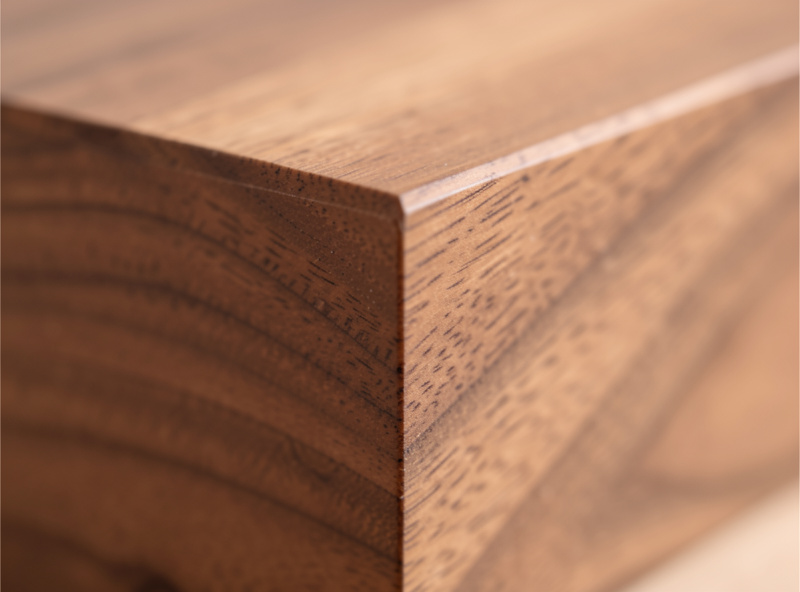
The tempting shortcut is a single profile cut at full depth that both shapes and finishes the part in one go. It works on rigid industrial machines. On a flexy hobby gantry it produces three predictable problems: a wall that is not square because the tool deflected under the full cut, chatter marks from the tool vibrating at high engagement, and a burned or fuzzy edge in wood from heat and recutting. You can sometimes hide it in rough construction lumber, but it shows the instant the part needs to fit something.
The fix costs you one extra operation and a few minutes. Rough the profile leaving 0.3 mm, then run the same profile again at zero stock as a finishing contour. The second pass removes a sliver, deflects almost nothing, and leaves a wall you can glue or fit. This is the same logic that makes finger joints and box joints close cleanly, covered in the CNC joinery guide.
I relearn this every time I get impatient. The last time, I cut a set of drawer fronts in oak as single full-depth profiles to save ten minutes, and every one came off with a wall measuring roughly 0.2 mm out of square at the bottom — invisible by eye, fatal once they had to sit flush in a face frame. I skimmed all four again with a zero-stock finish pass anyway, so the shortcut cost more time than it saved plus a strip of wasted stock. Now the finish contour goes on every part that has to fit something, no exceptions. The only jobs I still single-pass are rough shop fixtures and sacrificial spoilboard parts where a tenth of a millimetre of taper will never matter — and even then I leave a hair of stock on anything that will be glued, because a deflected glue face shows up as a gap line.
Sequencing: The Order That Saves Tools and Time
The order of operations matters as much as the operations themselves. My default sequence: rough everything with the big tool, then rest machine the corners the big tool missed with a smaller tool, then finish walls, then finish floors, and last any detail or chamfer. Roughing first means the small finishing tool never sees a full-width cut. Rest machining between rough and finish keeps the small tool out of trouble — full coverage of that step is in the rest machining guide.
Tool changes are the other sequencing concern. Group operations by tool so you change bits as few times as possible — every change is a re-zero and a chance to introduce error. On machines without an automatic tool changer, I plan the whole job around minimizing manual swaps. The feeds for each tool come from chipload reasoning, not the box, and the starting points are in the feeds and speeds chart and the end mills guide.
Choosing Tools for Each Job
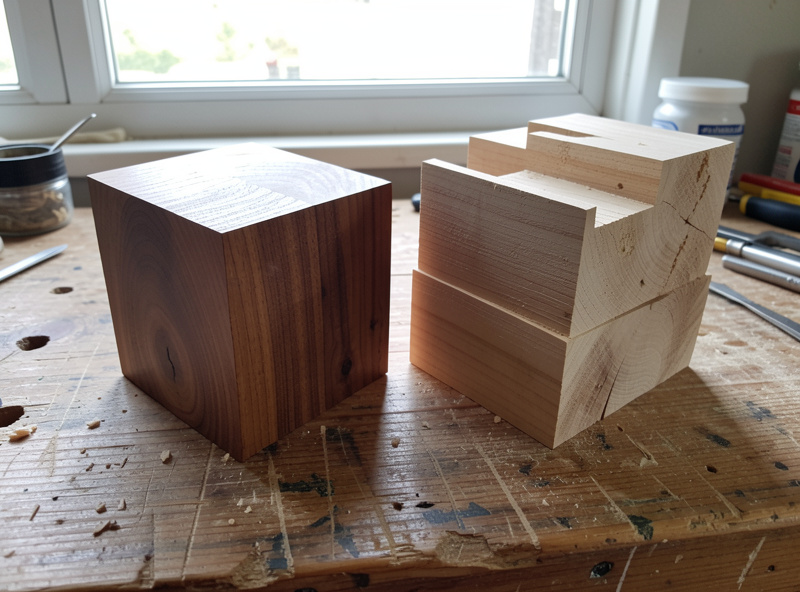
Roughing wants a tool that clears chips and resists deflection: a stout 1/4 inch two-flute or single-flute, short stick-out, full shank in the collet. Finishing wants the geometry that suits the surface: an upcut or compression bit for clean wall edges, a ball-nose for 3D surfaces, a downcut where the top edge must stay crisp. A compression bit is the one that gives a clean top and bottom edge in plywood, which is why I keep one on the shelf for finish profiling sheet goods — you can find a compression router bit set on Amazon if you cut a lot of ply. As an Amazon Associate I earn from qualifying purchases.
Stick-out is the quiet variable. The longer the tool hangs out of the collet, the more it deflects, so I rough and finish with the shortest tool that reaches the depth. A 1/4 inch bit choked up tight is dramatically stiffer than the same bit hanging out an extra 15 mm. Match the tool to the job and the job to the machine, and most of the broken-bit stories never happen.
Frequently Asked Questions
How much stock should I leave for finishing?
Leave 0.2 mm to 0.5 mm of radial stock on walls for the finishing pass, and often zero on the floor if the rougher’s flat bottom is acceptable. The key is consistency: an even allowance gives the finishing tool a constant load and a constant deflection, which is what produces a straight, square wall.
Can I rough and finish with the same tool?
Yes, and it is common on simple parts. Run a roughing pass leaving 0.3 mm, then run the same toolpath again at zero stock as a finishing pass. Using one tool saves a change; the separation of passes is what matters, not whether the tool is different.
Why is my wall not square after a single full-depth cut?
The tool deflected under the heavy load. On a flexy hobby gantry a full-depth profile cut pushes the cutter away from the wall, leaving it out of square and often tapered. Roughing leaving 0.3 mm then finishing at zero stock fixes it because the light finish pass deflects almost nothing.
Should roughing or finishing use climb milling?
Use climb milling for the finishing pass to get the cleanest edge, since the chip thins toward the exit and the tool does not drag. For heavy roughing on a belt-driven or flexy machine, conventional or light climb is safer because aggressive climb can grab and self-feed the tool.
What order should CAM operations run in?
Rough with the largest tool first, rest machine the corners a big tool missed, then finish walls, finish floors, and add detail last. This sequence keeps small tools out of full-width cuts and minimizes tool changes, each of which is a re-zero and a chance for error.