Safety first. The following information is for educational purposes. CNC machining involves high-speed rotating cutters. Always wear eye and ear protection, never leave a running machine unattended, and verify all feeds and speeds for your specific setup.
A brushless spindle upgrade is the highest-value first mod on a budget CNC like a 3018, and it does not mean jumping straight to a 65mm VFD spindle. Swapping the stock brushed 775 DC motor for a 300 to 500W brushless DC spindle is cheap, quiets the machine, adds usable torque, and lasts far longer because there are no brushes to wear. The full VFD induction spindle is the next rung up, not the only option.
I keep the budget machines on my bench honest precisely because this is where most people start, and the brushed-motor stage is the weakest link on every one of them. This guide lays out the upgrade ladder — brushed motor at the bottom, brushless DC spindle as the first real step, VFD induction spindle as the serious rung — with the wiring, mounting, and honest worth-it call for each. It sits under the CNC spindle and router guide; if your machine is bigger than a 3018, the router vs spindle comparison covers the trim-router-to-VFD jump that suits it better.
What a brushless upgrade means at each tier
“Brushless” describes a motor with no carbon brushes, driven electronically instead of by physical contacts, and the upgrade looks different depending on where your machine starts. On a 3018-class machine the existing spindle is a brushed DC motor, so going brushless means a brushless DC spindle of similar size. On a Shapeoko or Onefinity the equivalent jump is from a brushed trim router to a brushless three-phase induction spindle on a VFD.
Both paths buy the same things: no brushes to wear out, quieter running, more consistent torque, and usually better runout and tool holding. The difference is scale, weight, and wiring complexity. Matching the upgrade to your machine’s frame and Z-axis is the whole game — a spindle the gantry cannot carry is wasted money, a point I make in the Z-axis upgrade guide. Know which rung you are on before you buy.
The bottom rung: the brushed 775 motor
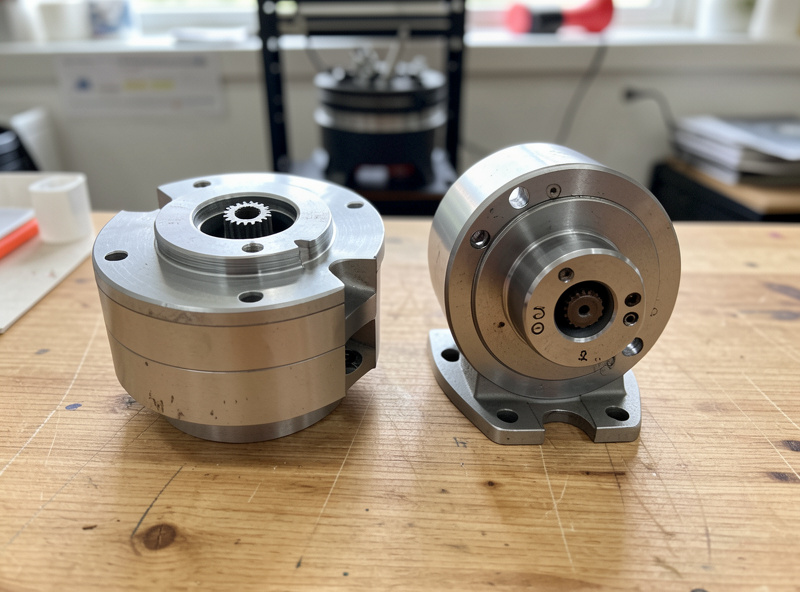
Budget machines ship with a small brushed DC motor — commonly a 775-size unit around 300W on 12 to 48 volts, with a fixed ER11 collet or a simple chuck. It cuts, but it is the limiting part of the machine: torque is thin, so it bogs in anything harder than soft wood, the brushes wear and arc, runout is often mediocre, and it gets loud and hot under sustained load.
The brushed motor is fine for learning the machine and cutting foam, soft wood, and light engraving, and there is no shame in running one while you find your footing. But the moment you want cleaner finishes, harder materials, or longer unattended jobs, it is the first thing holding you back — ahead of the controller, the bits, even the frame. That is what makes it the highest-return upgrade target on a budget machine, and why the brushless step pays off so visibly.
The first real upgrade: a brushless DC spindle
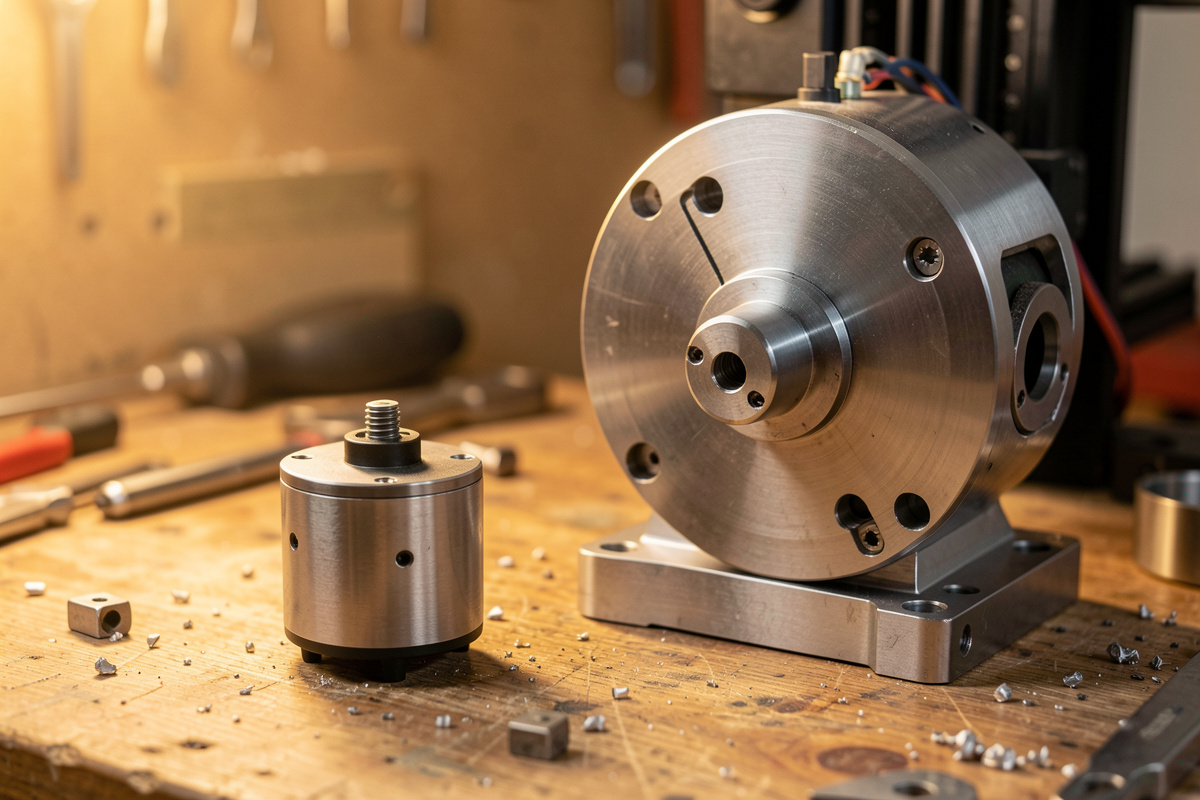
The natural next step on a small machine is a 300 to 500W brushless DC spindle, typically a 52mm body on 48 volts with an ER11 collet and its own electronic driver. It bolts roughly where the old motor lived, runs noticeably quieter, holds torque better so it stops bogging, and lasts far longer with no brushes to replace. Runout on a decent unit is a clear step up from the stock motor, which means better finish and longer tool life.
This is the upgrade that makes a 3018 genuinely pleasant to run, and it does it for a fraction of a full VFD setup. You get most of the quiet-and-torque benefit at the small scale the machine can actually use. It will not turn a 3018 into an aluminum machine — the frame rigidity caps that, not the spindle — but it removes the worst bottleneck and lets the rest of the machine breathe. For what the gantry can and cannot do with more power, the CNC router upgrades guide sets honest expectations.
As an Amazon Associate I earn from qualifying purchases. A 500W brushless spindle kit that bundles the spindle, driver, and power supply is the simplest way to do this swap without mismatching the controller.
The serious rung: a VFD induction spindle
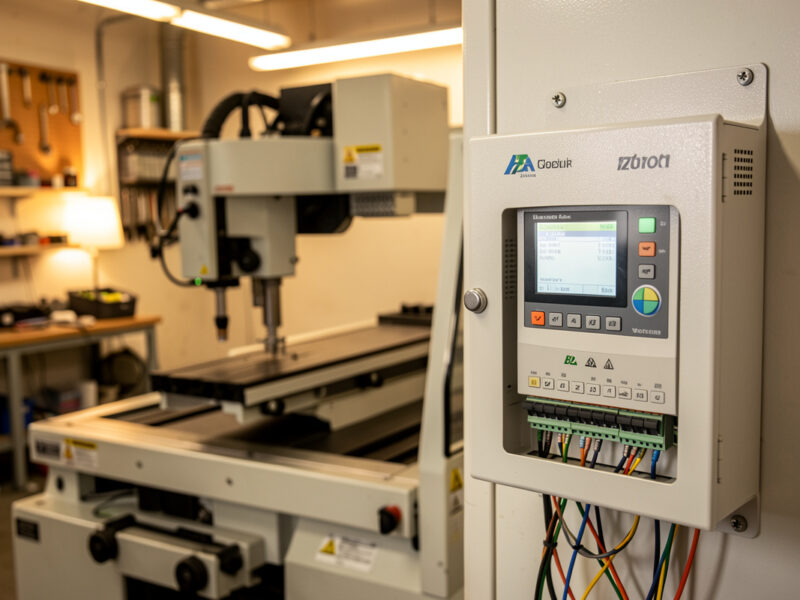
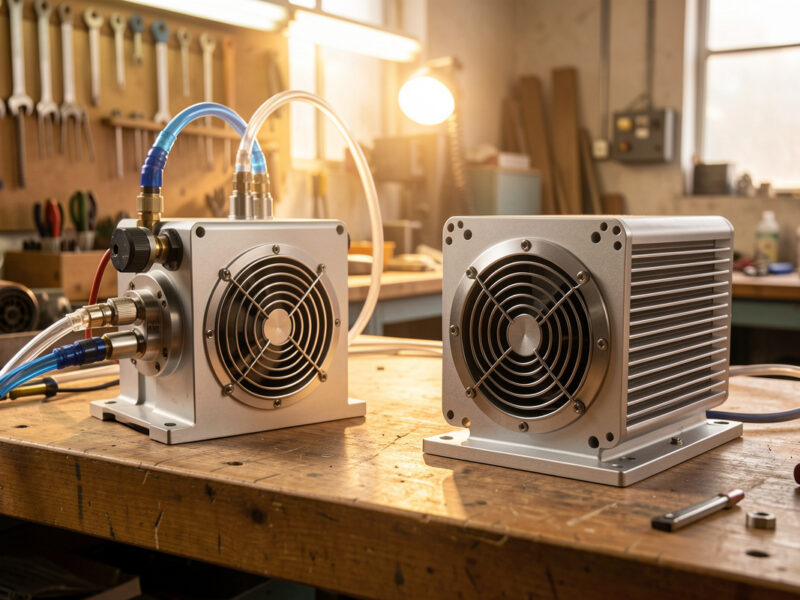
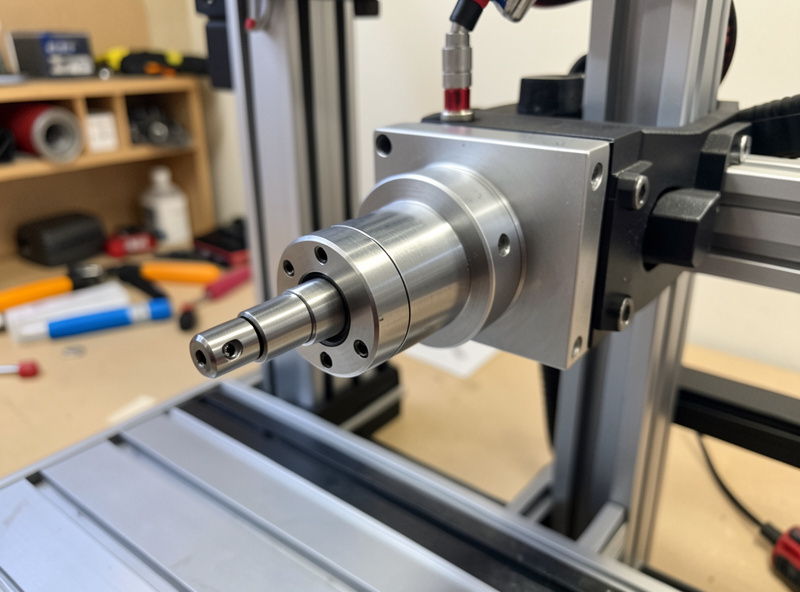
Above the brushless DC spindle sits the three-phase induction spindle on a VFD — a 65mm 0.8 to 1.5kW air-cooled or water-cooled unit. This is the upgrade for a Shapeoko, Onefinity, or a steel-frame build with the rigidity and Z-axis to carry it. It brings real continuous power, the quietest running, full ER collet flexibility, and the low-RPM torque that makes aluminum routine rather than a gamble.
It is also more machine to install: a VFD to wire and configure, a heavier spindle needing a proper mount, and shielded cabling routed away from your signal wires. On a tiny 3018 frame a 65mm VFD spindle is usually too big and heavy to be worth forcing on, which is exactly why the brushless DC step exists as the right-sized upgrade for small machines. If your machine can carry it, the setup is covered end to end in the VFD setup guide, and the cooling choice in water vs air cooling.
Wiring and mounting each step
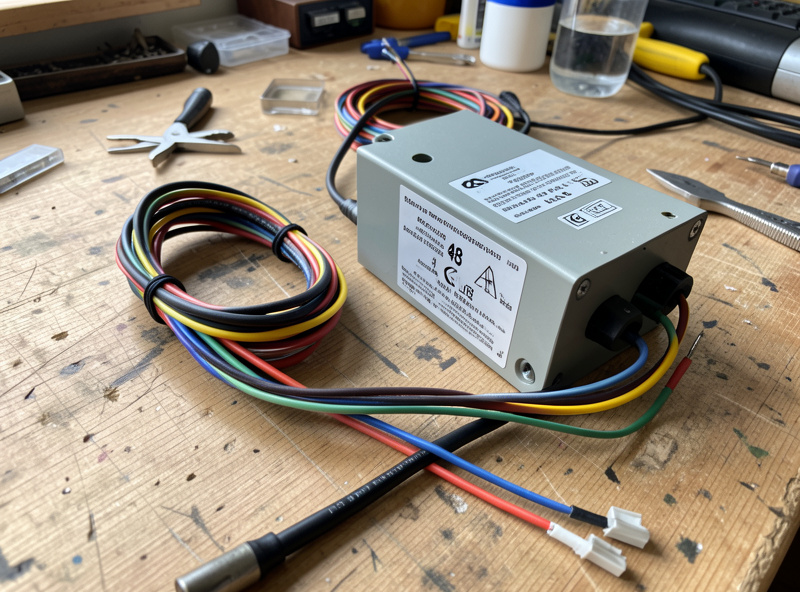
A brushless DC spindle needs a DC power supply sized to the spindle (commonly 48V), a brushless driver that takes a control signal, and a mount to fit the new body diameter to your Z-axis. Many kits include a driver with a PWM or 0–10V input so your GRBL controller can set speed, the same way a VFD does — wire that to the controller’s spindle output and you get programmable RPM instead of a manual knob.
A VFD induction spindle adds the VFD itself between mains and motor, three-phase shielded cable to the spindle, and grounding of the chassis, spindle, and shield. The mount is heavier-duty and the cable wants its own lane away from signal wiring to avoid lost steps. Whichever tier you are on, measure the body diameter against your Z-axis mount before buying — a 52mm brushless and a 65mm or 80mm VFD spindle all need different clamps, and the mount is the detail people forget until the spindle arrives and does not fit.
| Tier | Typical power | Suits | Wiring | Aluminum? |
|---|---|---|---|---|
| Brushed 775 motor | ~300W DC | Stock 3018 (baseline) | DC, simple | No |
| Brushless DC spindle | 300–500W DC | 3018 / small machines | PSU + driver, PWM/0–10V | Very light only |
| VFD induction (air) | 0.8–1.5kW | Shapeoko / Onefinity | VFD, shielded cable | Yes, with care |
| VFD induction (water) | 1.5–2.2kW | Rigid / steel-frame builds | VFD + coolant loop | Yes, routinely |
Is the brushless upgrade worth it for your machine?
On a small budget machine, the brushless DC spindle is almost always worth it: modest cost, big jump in noise, torque, finish, and lifespan, and it right-sizes to a frame that cannot use more. It is the upgrade I steer 3018 owners toward before anything fancier, because it fixes the worst bottleneck without pretending the machine is something it is not.
If you are on a Shapeoko, Onefinity, or a rigid build, skip the brushless DC tier and go to the VFD induction spindle, where the rigidity to use real power actually exists. Either way, the principle holds: match the spindle to the machine that carries it, fix the foundation first, and upgrade the bottleneck rather than the spec that looks best on paper. Where the spindle sits among the whole machine’s priorities is laid out in the spindle and router guide and the how to choose a desktop CNC machine guide.
Frequently Asked Questions
What is the best spindle upgrade for a 3018 CNC?
A 300 to 500W brushless DC spindle, typically a 52mm body on 48 volts with an ER11 collet. It bolts roughly where the stock brushed motor lived, runs quieter, holds torque better, and lasts far longer with no brushes. A 65mm VFD spindle is usually too heavy for a 3018 frame.
Is a brushless DC spindle better than the stock motor?
Yes, clearly. Compared to the stock brushed 775 motor, a brushless DC spindle is quieter, holds torque so it stops bogging, has lower runout for better finish, and lasts much longer because there are no brushes to wear. It is the highest-value first upgrade on a budget machine.
Can a brushless DC spindle cut aluminum?
Only very light work, and the limit is usually the machine frame, not the spindle. A 3018’s rigidity caps what any spindle can do in aluminum. For routine aluminum you want a VFD induction spindle on a rigid machine like a Shapeoko or Onefinity.
Do I need a VFD for a brushless spindle?
Not for a brushless DC spindle, which uses a DC power supply and a brushless driver, often with a PWM or 0 to 10V input for programmable speed. A VFD is needed only for three-phase induction spindles, which are the larger 65mm and 80mm units.
Will a brushless spindle fit my machine’s mount?
Only if the body diameter matches your Z-axis clamp. A 52mm brushless DC spindle, a 65mm VFD spindle, and an 80mm VFD spindle all need different mounts. Measure your Z-axis mount and the spindle body before buying, since the mount is the detail people forget.