Safety first. The following information is for educational purposes. CNC machining involves high-speed rotating cutters. Always wear eye and ear protection, never leave a running machine unattended, and verify all feeds and speeds for your specific setup.
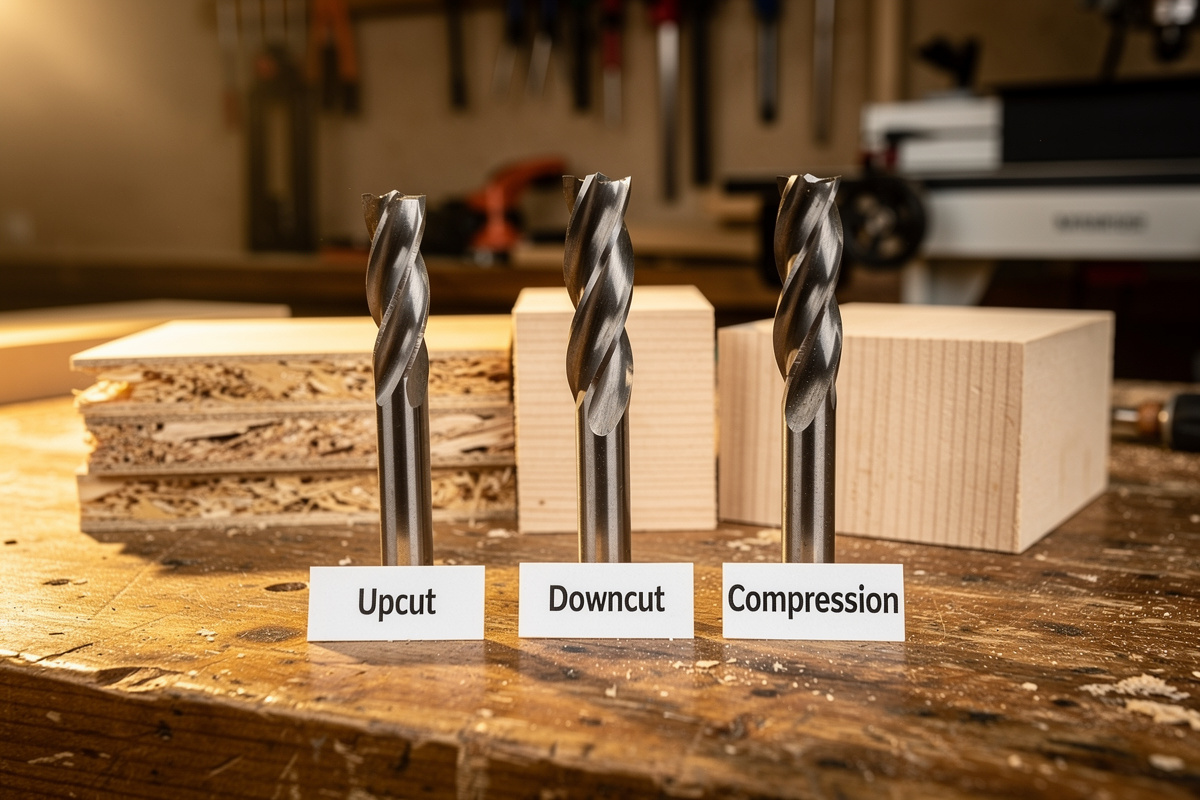
Downcut vs upcut comes down to which face of your material has to look clean. An upcut bit pulls chips up and out of the cut, keeping the slot clear and the bit cool but lifting and fraying the top edge. A downcut bit pushes chips down for a crisp top edge at the cost of chip evacuation. A compression bit combines both to give clean top and bottom edges in plywood in one pass.
This is the most misunderstood bit choice on a desktop machine, and getting it wrong is the difference between a furniture-grade panel and a fuzzy mess. Across the machines I run, helix direction is the call I think about before I even pick a diameter, because it decides edge quality, chip behavior, and whether the part stays put on the spoilboard. It is one of the five families in my CNC router bits guide, and on a flexy hobby desktop CNC it matters even more because the wrong direction can lift a poorly-held part right off the table.
What Helix Direction Actually Does
The flutes of an end mill spiral around the bit at a helix angle, and the direction of that spiral — combined with the bit’s rotation — decides which way chips and forces are pushed. An upcut bit’s spiral augers chips upward, out of the cut. A downcut bit’s spiral is reversed, so it pushes chips downward, into and out the bottom of the cut. Same rotation, opposite chip direction, opposite edge quality.
Those chip directions create vertical forces on the workpiece too. An upcut bit pulls up on the material, which helps clear chips but tries to lift the part — a real problem with thin stock or weak workholding. A downcut bit pushes down on the material, helping hold it against the spoilboard, which is why downcut bits pair so well with thin sheet on tape. Understanding this is half of choosing the right bit; the other half is workholding, which I cover in CNC workholding and fixturing.
Upcut Bits — Chip Clearance and Cool Cutting
An upcut bit is the default end mill and the right choice for most solid-wood and plastic work where the top surface is not the show face — or where it will be sanded anyway. By augering chips up and out, it keeps the slot clear, which prevents chip re-cutting, keeps the bit cool, and lets you cut deeper and faster. For pocketing, slotting, and 3D roughing, the upcut’s chip evacuation is exactly what you want.
The cost is the top edge. Pulling up on the material lifts wood fibers and tears out the top edge of plywood, melamine, and veneered panels, leaving fuzz or splintering. On solid hardwood it is usually minor; on a faced sheet good it is unacceptable for a visible edge. So I reach for upcut whenever chip evacuation matters more than the top edge — solid wood, plastics, deep pockets — and switch away when a clean top face is the point.
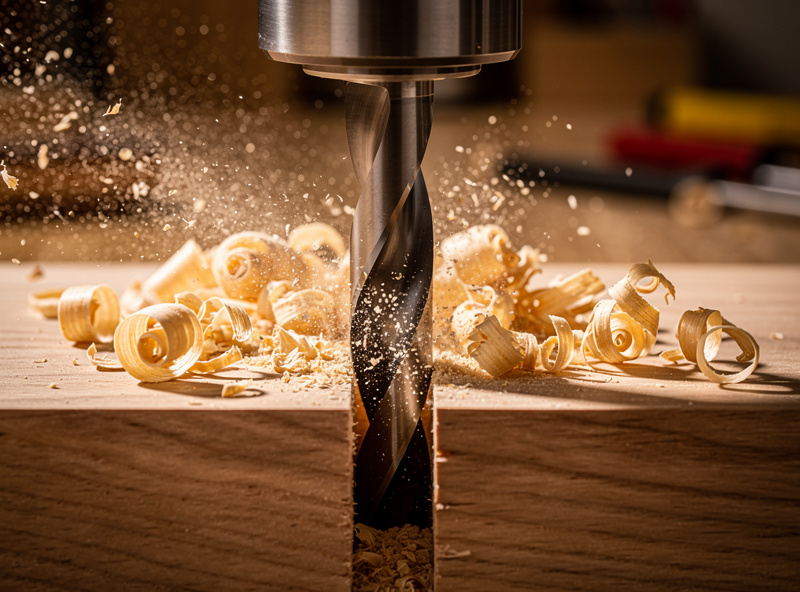
Downcut Bits — Clean Top Edges and Held-Down Parts
A downcut bit flips the trade: it gives a glass-clean top edge by pushing fibers down instead of lifting them, which is exactly what you need for shallow sign work, pocket tops, and the visible top face of plywood and melamine. It also pushes the workpiece down against the spoilboard, so thin parts and small cutouts stay put far better — a downcut on carpet tape is my go-to for thin sheet.
The catch is chip evacuation. Because a downcut packs chips down into the cut rather than clearing them, a deep slot fills with packed chips that generate heat, cause burning, and can snap the bit. So downcut bits are happiest in shallow cuts and pocket finishing where there is somewhere for chips to go, not deep single-pass slotting. If you must slot deep with a downcut, take light passes and clear the chips, or — better — reach for a compression bit.
Compression Bits — The Best of Both
A compression bit is the clever solution for faced plywood: it has an upcut section at the very tip and a downcut section above it. The upcut tip pulls the bottom fibers up for a clean bottom edge, while the downcut upper section presses the top fibers down for a clean top edge — so a single pass through cabinet plywood comes out crisp on both faces. For anyone cutting a lot of veneered or laminated sheet goods, the compression bit is the upgrade that ends edge tear-out.
The one rule that makes or breaks a compression bit is the first pass depth. The transition between the upcut and downcut sections sits a short distance up from the tip, and your first pass must go deep enough to engage the upcut portion fully into the material — typically deeper than the upcut length — or you lose the clean bottom edge and get fraying. That is why compression bits work best in a single full-depth pass or a deep first pass, not a series of shallow ones, which makes them less suited to very thin stock.
| Bit Type | Top Edge | Bottom Edge | Chip Clearance | Best Use |
|---|---|---|---|---|
| Upcut | Frays / lifts | Clean | Excellent | Solid wood, plastics, deep pockets |
| Downcut | Clean | Can fray | Poor (packs) | Shallow signs, pocket tops, thin sheet |
| Compression | Clean | Clean | Good | Faced plywood through-cuts |
| Straight (no helix) | Moderate | Moderate | Moderate | Plastics, brittle materials |
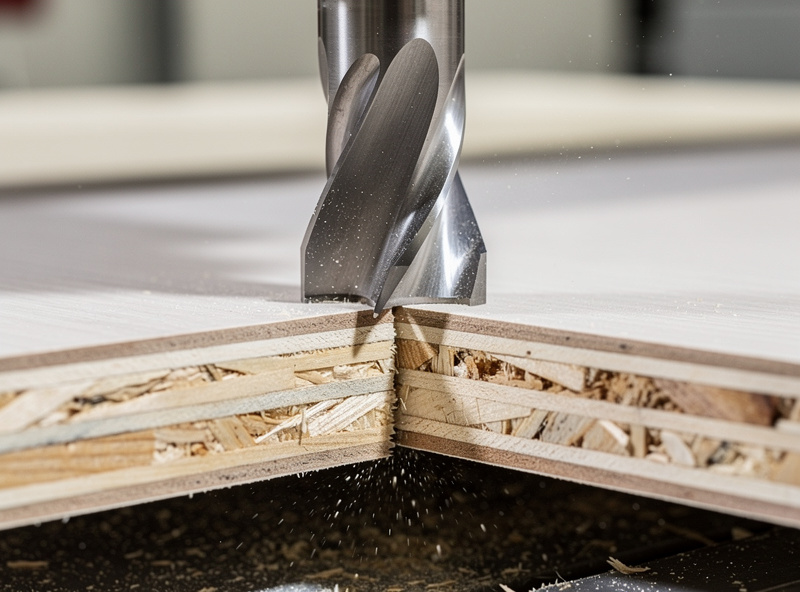
How I Choose Helix Direction for a Job
My decision takes about five seconds and follows the material and the show face. Solid wood pocket or 3D roughing where the top will be sanded? Upcut, for the chip clearance. Shallow sign carve or a pocket whose top edge shows? Downcut, for the clean top and the hold-down. A through-cut in faced plywood or laminated panel where both edges show? Compression, every time. Thin sheet on tape that wants to lift? Downcut to press it down.
The mistake I see most is people defaulting to a single bit for everything and then fighting the edge quality with sandpaper. The bit should match the job. The second most common mistake is a downcut in a deep slot — packed chips, burning, broken bit. If you are getting fuzzy top edges, burning, or lifted parts, helix direction is usually the fix, alongside the feeds in my CNC feeds and speeds chart and the material-specific notes in cutting hardwood. And when the last pass cuts a profile free, helix direction works hand-in-hand with your CAM strategy — see my breakdown of CNC tabs vs onion skin for how to keep parts from launching on that final cut.
A Note on Plastics and Brittle Materials
Helix direction interacts with material in ways worth knowing. In acrylic and other plastics, a single-flute upcut O-flute is usually the right call because chip evacuation prevents the chip from re-melting onto the part — the clean-top-edge benefit of a downcut matters less than not melting the slot. For very brittle materials, a straight-flute (zero helix) bit applies less vertical force and reduces chipping. My full plastics method is in acrylic settings.
So the upcut/downcut/compression decision is mostly a wood and sheet-goods question; in plastics, chip evacuation and melting dominate, and in metal you are choosing aluminum-specific geometry anyway. Know which question the material is asking before you reach for a helix direction.
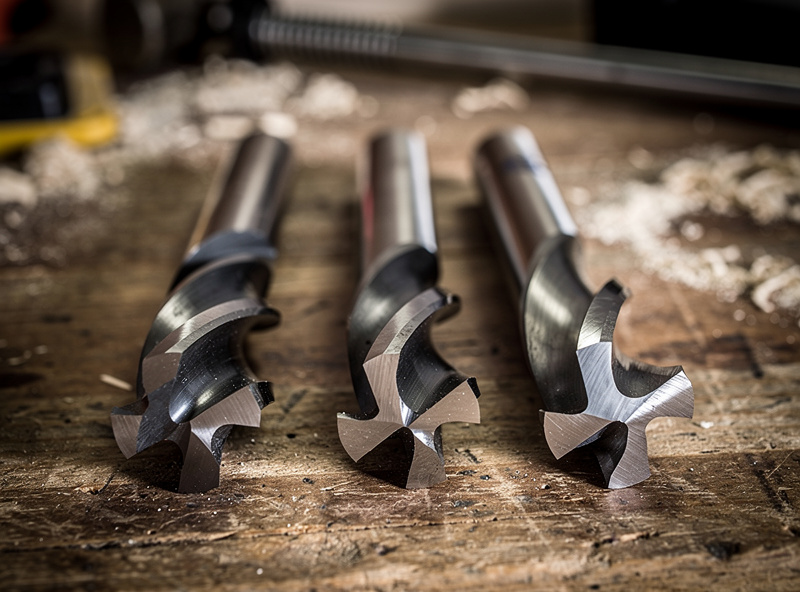
Which to Buy
For a versatile starter shelf, get a 1/4″ upcut spiral bit for general work, a 1/4″ downcut spiral bit for clean-top sign work and thin sheet, and a 1/4″ compression bit if you cut faced plywood. Those three cover the overwhelming majority of edge-quality situations a desktop machine runs into.
Match the diameter to your feature size, buy solid carbide, and remember the compression bit’s first-pass-depth rule. The right helix direction will save you more sanding than any premium coating ever will.
Disclosure: As an Amazon Associate I earn from qualifying purchases. The links above point to the spiral and compression bits I actually run; buying through them supports this site at no extra cost to you.
Frequently Asked Questions
What is the difference between upcut and downcut router bits?
An upcut bit pulls chips up and out of the cut, clearing the slot and keeping the bit cool but fraying the top edge. A downcut bit pushes chips down for a clean top edge but packs chips in deep cuts. Upcut suits solid wood and pockets; downcut suits clean-top signs and thin sheet.
When should I use a downcut bit?
Use a downcut bit for shallow sign work, pocket tops, and any cut where the top face must look clean, and for thin sheet that needs holding down against the spoilboard. Avoid downcut bits for deep slotting because they pack chips into the cut, causing heat, burning, and broken bits.
What is a compression bit used for?
A compression bit cuts faced plywood and laminated panels with clean edges on both top and bottom in one pass. Its upcut tip lifts the bottom fibers clean while the downcut upper section presses the top fibers down. The first pass must be deep enough to engage the upcut section.
Why does my plywood edge fray on a CNC?
You are likely using an upcut bit, which lifts and frays the top veneer of plywood. Switch to a downcut bit for a clean top edge, or a compression bit for clean top and bottom edges in a through-cut. Sharp bits and correct feeds also reduce fraying.
Can a downcut bit cut all the way through material?
Yes, but carefully. A downcut packs chips into deep cuts, so for through-cuts take lighter passes and clear chips, or use a compression bit instead. Downcut bits shine in shallow work and thin sheet where the top edge matters and chips have somewhere to escape.
Which bit holds thin material down best?
A downcut bit. Because it pushes the workpiece down against the spoilboard, it helps keep thin sheet and small parts from lifting, especially when paired with carpet tape or a vacuum table. An upcut bit pulls up and is more likely to lift weakly-held thin stock.