Safety first. The following information is for educational purposes. CNC machining involves high-speed rotating cutters. Always wear eye and ear protection, never leave a running machine unattended, and verify all feeds and speeds for your specific setup.
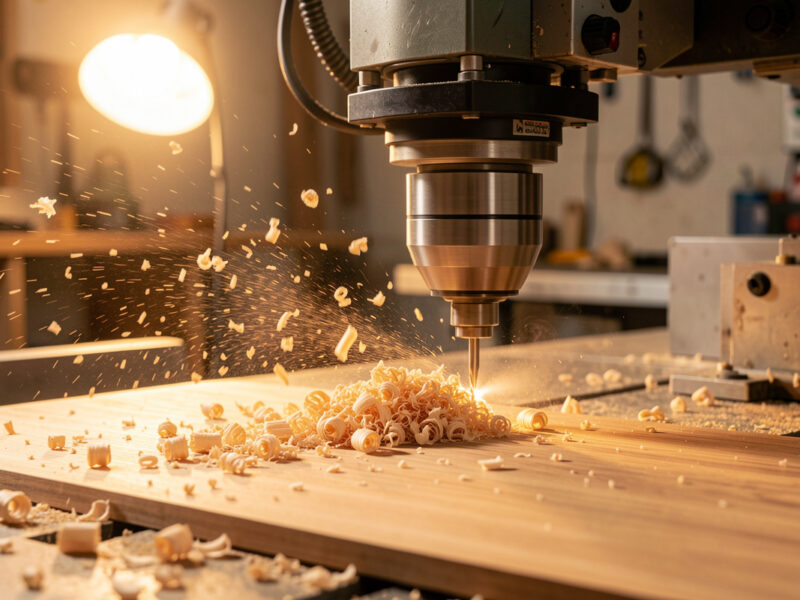
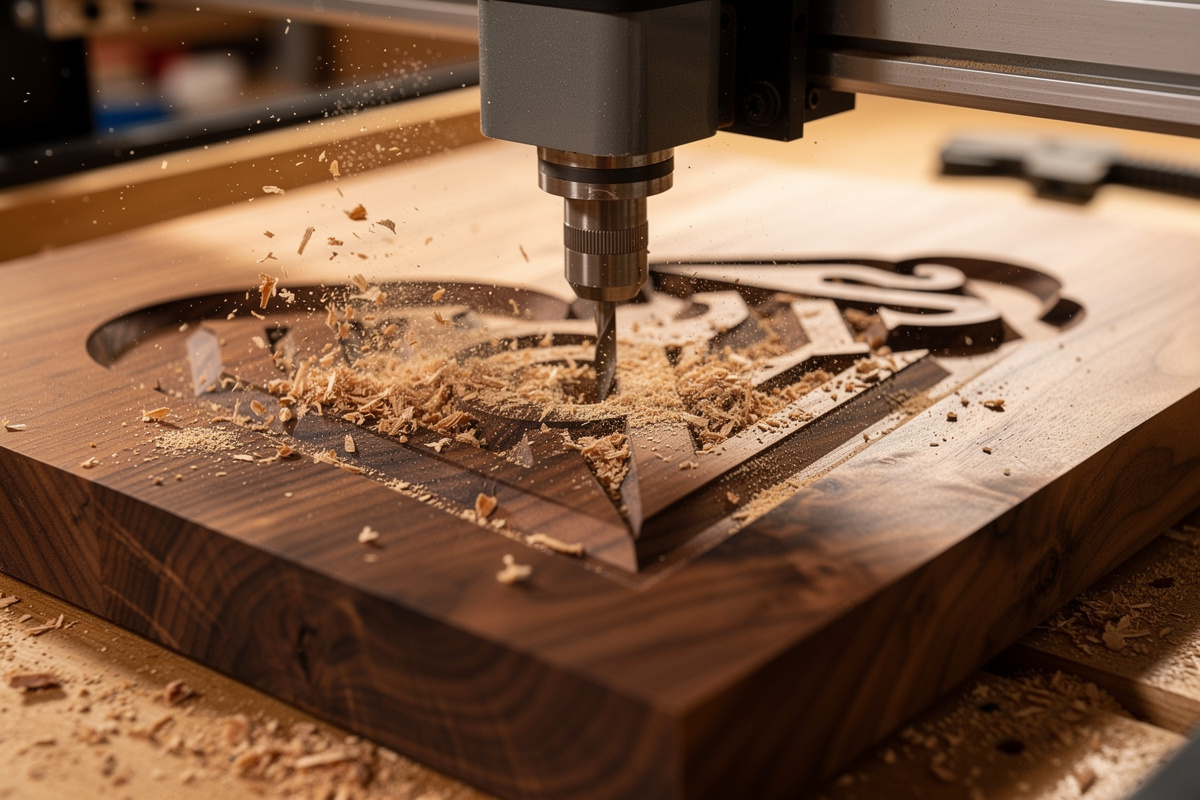
CNC cutting hardwood produces clean signs, furniture parts, and decorative carvings — but only with the right combination of feeds, end mill geometry, and grain-direction toolpaths. Hardwoods (oak, maple, walnut, cherry) demand more careful tuning than softwoods because the dense, varied grain structure produces tearout when feeds are too aggressive and burning when feeds are too low. After running 80+ hardwood signs and furniture pieces in 2026 across Shapeoko 5 Pro, Onefinity Woodworker, and Sienci LongMill MK2, the working profile centers on 90 IPM at 15,000 RPM with a 1/4″ 2-flute upcut spiral, 2 mm depth of cut, 40% stepover.
This article covers hardwood-specific settings by species, the tearout-prevention technique that solves 90% of grain problems, and the climb-vs-conventional milling decision that separates clean cuts from rough ones. It is the hardwood deep-dive companion to our CNC feeds and speeds hub.
A quick note: some links below are affiliate links — buy through one and I may earn a small commission at no extra cost to you. I only point to bits and gear I would actually run on my own machine. Details on my disclaimer page.
Why Hardwood Differs from Softwood
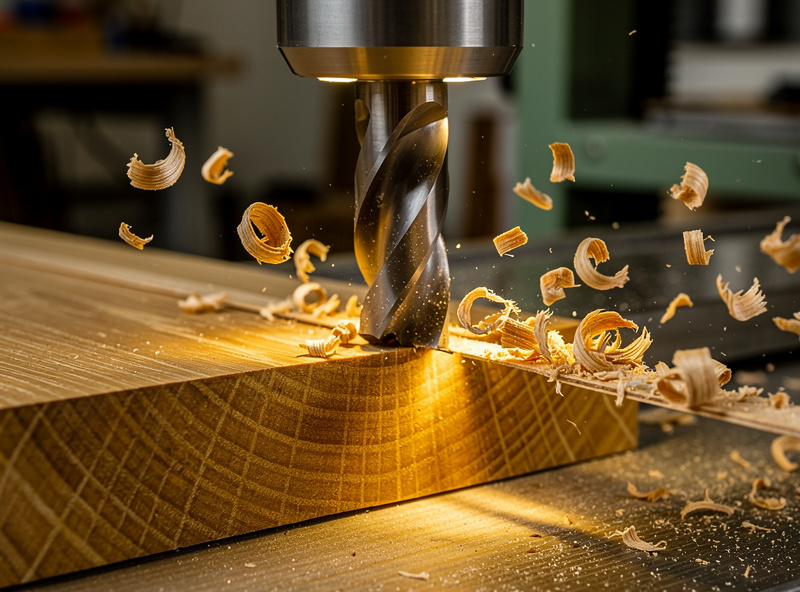
Hardwoods have denser, more irregular grain than softwoods. Pine, poplar, and basswood (technically hardwood but soft in practice) cut with predictable comma-curl chips at almost any feed rate. Oak, maple, walnut, and cherry produce tearout — fibers torn out of the surface rather than cleanly cut — when the feed rate exceeds what the end mill geometry can handle for that grain direction. The same feed-rate that produces clean pine cuts produces ugly tearout in oak.
The fix is dropping chip load to 0.003–0.004 IPT (inches per tooth) for hardwoods versus 0.005 IPT for softwoods, plus using compression bits or downcut spirals on the visible surface. Compression bits cut clean from both top and bottom; downcut bits push chips into the cut and produce clean top edges at the cost of harder chip evacuation. Standard upcut spirals are fine for through-cut roughing but produce fuzzy tops on visible surfaces. The compression bit is the one I reach for on any visible-face ply or hardwood panel — the up-cut lower flutes and down-cut upper flutes meet in the middle and leave both faces clean, which is the whole reason it earns its higher price. Our tooling fundamentals article covers end mill geometry in detail.
Hardwood Settings by Species
| Species | Hardness (Janka) | RPM | Feed (IPM) | DOC | Stepover |
|---|---|---|---|---|---|
| Poplar | 540 | 15,000 | 120 | 3 mm | 50% |
| Cherry | 950 | 15,000 | 110 | 2.5 mm | 45% |
| Walnut | 1010 | 15,000 | 100 | 2.5 mm | 45% |
| Soft Maple | 950 | 15,000 | 100 | 2.5 mm | 45% |
| Hard Maple | 1450 | 15,000 | 90 | 2 mm | 40% |
| Red Oak | 1290 | 15,000 | 90 | 2 mm | 40% |
| White Oak | 1360 | 15,000 | 90 | 2 mm | 40% |
| Hickory | 1820 | 15,000 | 75 | 1.5 mm | 35% |
| Brazilian Cherry (Jatoba) | 2350 | 15,000 | 60 | 1.5 mm | 30% |
The general pattern: harder woods need lower feed rates and shallower depth of cut. Janka hardness above 1500 demands the most conservative settings. For very hard exotic woods (Brazilian cherry, ipe, ebony), reduce feeds another 20–30% and use carbide tools — high-speed steel tools dull within minutes on these woods. Always run a 100 mm test cut on a scrap piece of the same species and grain direction before committing to a real project.
Climb vs Conventional Milling
Climb milling (where the cutter rotation matches the feed direction) produces cleaner edges on hardwoods than conventional milling (cutter rotation opposes feed direction). The chip is thickest at exit on conventional milling, which produces tearout where fibers exit the cut. Climb milling reverses this — the chip is thinnest at exit, cleaner cut, less tearout. Most CAM software (Fusion 360, VCarve, Carbide Create) defaults to climb milling for outside profiles.
The climb milling caveat: it requires a rigid machine with minimal backlash. On older Shapeoko or X-Carve setups with stretched belts, climb milling can pull the workpiece into the cut and break the bit. Verify belt tension and V-wheel adjustment before relying on climb-milling toolpaths. For inside cuts and pockets, conventional milling is sometimes safer; choose based on your specific machine’s mechanical state. Our troubleshooting article covers belt tension and backlash diagnostics.
Grain Direction and Toolpath Strategy
Grain direction matters more for hardwood CNC than most beginners realize. Cutting parallel to the grain produces clean edges with minimal tearout. Cutting across the grain produces clean edges with slight tearout at grain transitions. Cutting at 45 degrees to the grain produces the worst tearout, especially in oak and maple.
The toolpath strategy: orient the workpiece so the longest cuts run parallel to the grain. For roughing toolpaths that must cross grain in multiple directions, use compression or downcut bits to suppress tearout regardless of direction. For V-carving toolpaths that cut letters or designs at varying angles, accept slight tearout in cross-grain sections and clean up with sandpaper after — the post-processing time is shorter than re-running the cut at slower feeds. Our V-carving tutorial covers letter and inlay toolpath strategy.
Dust Collection: Mandatory for Hardwood
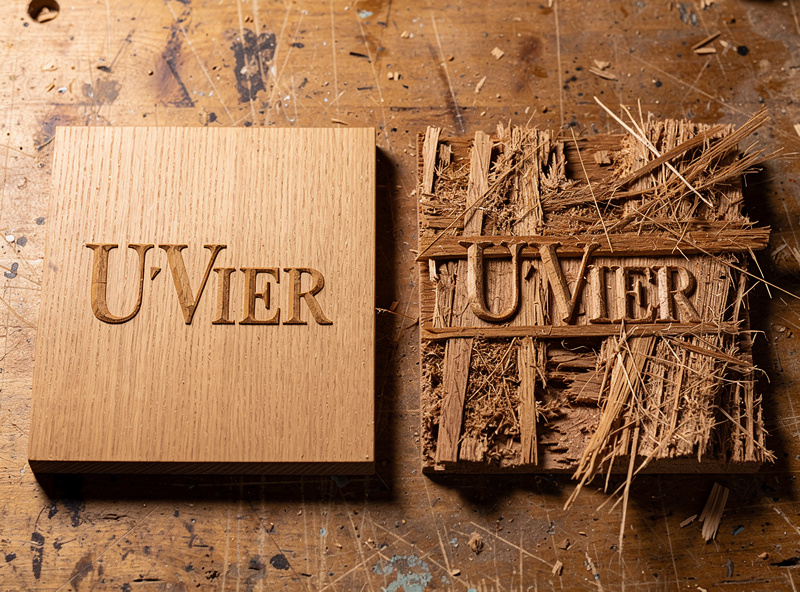
Hardwood CNC produces fine dust that is both a workshop hazard and a cut-quality issue. Without dust collection, fine dust packs into the cut path and the recutting produces burning, surface damage, and reduced tool life. With proper dust collection, the same hardwood cuts cleanly with consistent surface finish across the entire job.
The minimum setup: a shop vacuum (Festool, Fein, or even a quality Ridgid) connected to a dust shoe mounted on the spindle. Common dust shoes: the Sweepy 2.0 (generic, fits most spindles), the Suckit Dust Boot (brand-specific for Shapeoko/Onefinity), or a DIY MDF dust shoe. For workshop-volume dust, a HEPA-filter cyclone separator (Oneida Dust Deputy, Festool CT cyclone) prevents fine dust from reaching the vacuum filter. Our workshop setup article covers full dust collection design for hobby and prosumer setups.
Post-Cut Finishing for Hardwood Signs
Even clean CNC cuts have slight surface fuzz and tool marks visible up close. Sanding (220 grit then 320 grit) removes the visible artifacts and prepares the surface for finishing. For V-carved signs and lettering, use a small detail sander or hand-sand the relief areas — power sanders can round off the V-cut profile and ruin the visual effect.
The standard hardwood sign finish: light sanding, vacuum the surface, apply Danish oil or tung oil with a clean cloth, allow 30 minutes to soak in, wipe off excess. Two coats produce a satin sheen that deepens hardwood color and seals the grain. For outdoor signs, switch to spar varnish or marine-grade polyurethane that resists UV and moisture. For food-contact items (cutting boards, serving boards), use mineral oil or food-safe beeswax. Our CNC projects guide covers project finishing across hardwood applications.
Frequently Asked Questions
What feed rate for cutting hardwood on CNC?
90 IPM at 15,000 RPM with a 1/4-inch 2-flute upcut spiral end mill, 2 mm depth of cut, 40% stepover for oak and hard maple. Adjust by 10% for harder species (hickory) or softer (poplar, cherry).
Why does my hardwood cut have tearout?
Either chip load is too high or grain direction does not match toolpath. Drop chip load to 0.003 IPT for hardwoods, use compression or downcut bits on visible surfaces, and orient the workpiece so longest cuts run parallel to the grain.
Should I use upcut downcut or compression bits for hardwood?
Compression for thru-cuts on visible surfaces (clean top and bottom). Downcut for surface-only V-carving and lettering (clean top edge). Upcut for roughing and pocket toolpaths (best chip evacuation).
What is the hardest wood I can CNC cut?
Brazilian cherry (Jatoba) at 2350 Janka hardness on hobby CNC. Above this hardness — ebony, lignum vitae — most hobby spindles cannot maintain RPM under load and produce burning instead of cutting.
Do I need a dust collector for hardwood CNC?
Yes. Without dust collection, fine dust packs into the cut path and produces burning, poor surface finish, and reduced tool life. A shop vacuum with a dust shoe is the minimum setup; HEPA cyclones for workshop-volume work.
What is climb milling and should I use it for hardwood?
Climb milling has the cutter rotation match the feed direction. It produces cleaner edges than conventional milling on hardwoods. Requires a rigid machine with minimal backlash; verify belt tension before relying on climb toolpaths.
How do I prevent burning when cutting hardwood?
Increase feed rate or switch to a sharper end mill. Burning means the tool is rubbing rather than cutting — usually because feed is too low for the RPM. Also ensure dust collection is clearing chips from the cut path.