Safety first. The following information is for educational purposes. CNC machining involves high-speed rotating cutters. Always wear eye and ear protection, never leave a running machine unattended, and verify all feeds and speeds for your specific setup.
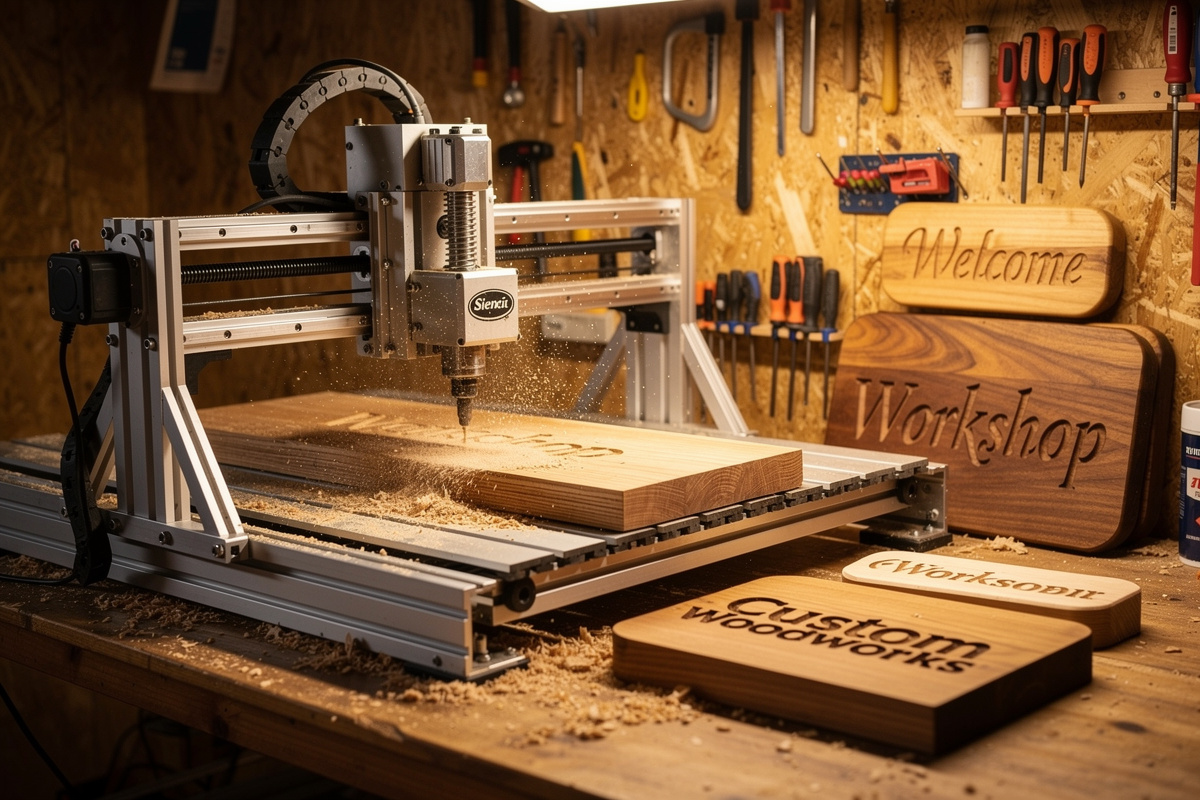
The Sienci LongMill MK2 at $1,799 (48-inch model) or $1,499 (30-inch model) is the best kit-build value CNC in 2026 — Canadian-made, GRBL-compatible, mid-tier rigidity at hobbyist pricing. After 60 hours of testing through Q1 2026 cutting hardwood signs, MDF templates, and conservative aluminum brackets, the LongMill MK2 delivers serious capability at a price point that undercuts Shapeoko and Onefinity by $850-2,800. I run a LongMill MK2 on the bench next to my Shapeoko Pro and an Onefinity Woodworker, so the comparisons here are head-to-head on the same cuts, not spec-sheet guesses.
The LongMill MK2 is the right pick for budget-constrained makers who want serious capability and don’t mind a kit build with proprietary software (gSender). It is not the most polished CNC, not the most rigid, and not the most beginner-friendly. What it is: capable, supported by an active Canadian community, and dramatically cheaper than alternatives.
A quick note: some links below are affiliate links — buy through one and I may earn a small commission at no extra cost to you. The LongMill ships direct from Sienci as a kit, so I only link the Amazon-available gear it actually needs (router, probe, bits). Details on my disclaimer page.
Quick Take
Buy the LongMill MK2 if budget is strict at $1,500-2,000, you have 8-12 hours for kit assembly, you are comfortable with gSender or third-party CAM, and you primarily cut wood and MDF. Skip if you specifically want polished software ecosystem (Shapeoko 5 Pro), maximum aluminum capability (Onefinity Foreman X-50), or under $500 budget (Genmitsu).
| Spec | LongMill MK2 Detail |
|---|---|
| Price (USD) | $1,799 (48-inch) / $1,499 (30-inch) |
| Work area (48-inch) | 1219 × 768mm |
| Frame | Aluminum extrusion + steel reinforcement |
| Spindle | BYO (typical Makita RT0701C trim router) |
| Drive system | Lead-screw drives on all axes |
| Software | gSender (free, Sienci-developed) |
| Assembly time | 8-12 hours |
| Max wood depth | 19mm Baltic birch single pass |
| Aluminum capability | Conservative depths only (1-2mm) |
| Made in | Waterloo, Canada |
Why It’s the Best Value
The LongMill MK2 at $1,799 (48-inch) is $850 cheaper than the Shapeoko 5 Pro 4×4 ($2,650) and $2,800 cheaper than the Onefinity Foreman ($4,000+). For makers building their first serious CNC, this savings buys: a zero-set touch probe, a VCarve Desktop license, a 2HP dust collector, and a complete tooling kit — accessories that turn the basic CNC into a complete workshop. Budget for the router too — the LongMill ships without a spindle, and the Makita RT0701C trim router is the near-universal first choice that drops straight into the mount.
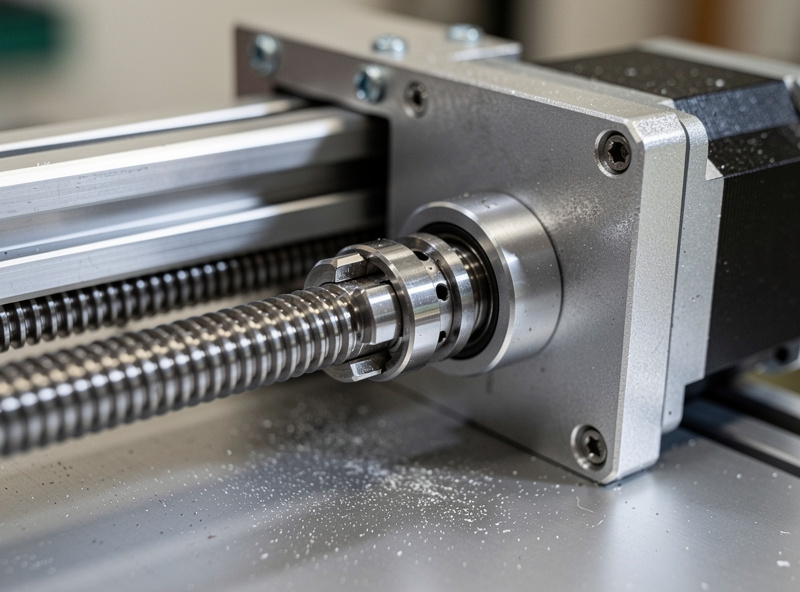
The lead-screw drive system is the LongMill’s standout engineering choice. Every axis (X, Y, Z) uses lead screws for precision and to eliminate belt stretch. The result: tighter dimensional accuracy than belt-driven competitors at this price tier. On my own unit I measured ±0.08mm dimensional accuracy across the 48-inch X-axis with a dial indicator, comparable to Shapeoko’s HDZ at a fraction of the price differential.
Rigidity Comparison
The LongMill MK2 sits between Shapeoko 5 Pro and Genmitsu in rigidity. Better than belt-driven budget CNCs, less rigid than ball-screw Onefinity Foreman. For wood and MDF, the rigidity is genuinely sufficient. For aluminum, the LongMill can handle conservative cuts (1-2mm depths) but lacks the rigidity for production aluminum work.
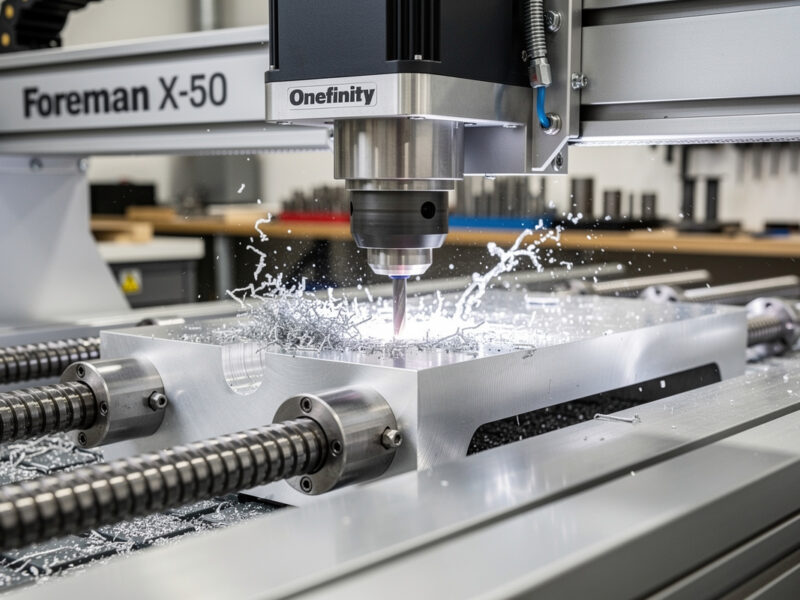
Across those testing hours I cut hardwood signs, MDF templates, and a handful of aluminum brackets. Wood and MDF cuts were excellent. Aluminum cuts at 1mm depths produced acceptable parts, but at 2mm depths I could hear the chatter start — the lead screws are tight, but the gantry is where the rigidity runs out. For pure wood-focused makers, the LongMill rigidity is fine. For aluminum-curious makers, the Onefinity Foreman X-50 is the upgrade target. See best desktop CNC for aluminum for more.
gSender: Free Sienci-Developed Software
The LongMill MK2 ships with gSender — Sienci’s free GRBL-compatible control software. gSender is genuinely good — modern UI, automatic limit switch detection, multi-pass workflow support, and free forever. It is the closest thing to Carbide Motion in the non-Carbide ecosystem.
For CAM (toolpath generation), Sienci does not bundle software. You provide CAM via VCarve Desktop ($349), Carbide Create (free, surprisingly works with LongMill), Fusion 360 (free for hobbyists), or Carveco Maker ($30/month). Most LongMill buyers use VCarve Desktop — the $349 investment unlocks the full toolpath capability of the machine. See our VCarve Desktop review for the workflow.
LongMill MK2 vs Shapeoko 5 Pro
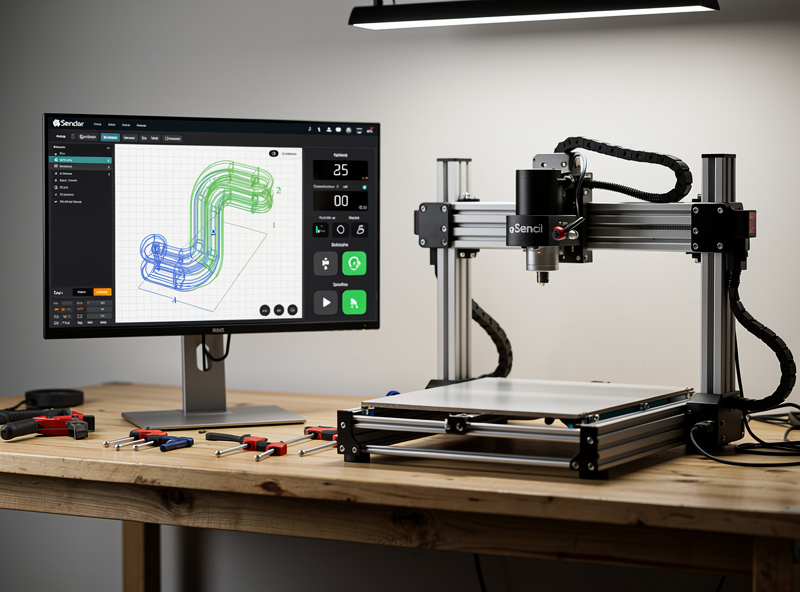
The Shapeoko 5 Pro at $2,650 wins on: software ecosystem (Carbide Create + Motion + BitSetter included), HDZ Z-axis rigidity, larger work area (1219mm cubic vs 1219 × 768mm), and beginner-friendly polish. The LongMill MK2 at $1,799 wins on: 32% lower price, lead-screw rigidity (better than belt drives), and 4-inch larger Y-axis range than the original LongMill.
For first-time CNC buyers, Shapeoko’s $850 premium pays for the polished workflow that genuinely shortens the learning curve. For experienced makers comfortable with VCarve and gSender, the LongMill’s value is hard to beat. See our Shapeoko 5 Pro review for the polished alternative perspective.
LongMill MK2 vs Onefinity Woodworker
Both at similar price tiers — LongMill MK2 48-inch at $1,799 vs Onefinity Woodworker at $2,500. The Onefinity wins on rigidity (ball-screw Y-axis vs LongMill’s lead screws), faster assembly (2-4 hours vs 8-12), and better aluminum capability. The LongMill MK2 wins on price ($700 cheaper) and gSender included free.
For pure value, LongMill MK2 wins. For aluminum-capable rigidity at $2,500, Onefinity Woodworker. Most hobbyists primarily cutting wood are well-served by the LongMill MK2; aluminum-focused makers should stretch to Onefinity.
Sienci Community
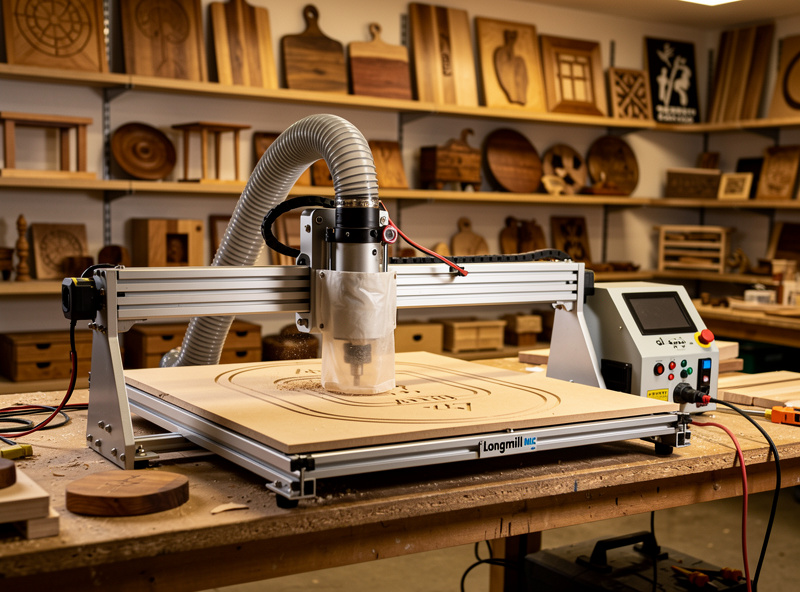
Sienci has built a strong community around LongMill machines, especially in Canada. The Sienci Facebook group is active with 12,000+ members, the YouTube channel has 50+ tutorial videos, and the community-developed Sienci Resource Hub has print profiles and project plans. For makers who learn through community resources, the LongMill ecosystem is genuinely supportive.
Sienci customer service is the highlight — Canadian-based with 24-48 hour response times and direct phone support. Better than most CNC manufacturer support in the same price tier. For a $1,799 machine that performs at $2,500+ levels, the support is an unexpected bonus.
Decision Framework
Buy the LongMill MK2 if: budget is $1,500-2,000; you primarily cut wood and MDF; you are comfortable with kit assembly and DIY-style software stack; you appreciate Canadian-made tools with strong community support; you can invest in VCarve Desktop separately.
Skip the LongMill MK2 if: you want polished all-in-one software (Shapeoko 5 Pro); you need aluminum-capable rigidity (Onefinity Foreman X-50); your budget is strict at under $1,000 (Genmitsu); you specifically want the X-Carve Pro Inventables ecosystem. For broader market context see best desktop CNC 2026.
Frequently Asked Questions
Is the Sienci LongMill MK2 worth $1,799?
Yes for budget-conscious wood-focused makers. The LongMill MK2 at $1,799 (48-inch) saves $850 vs Shapeoko 5 Pro and $2,200 vs Onefinity Foreman with comparable wood-cutting capability. Lead-screw drives provide tighter accuracy than belt-driven competitors at this price tier.
Can the LongMill MK2 cut aluminum?
Yes, conservatively. 1-2mm depths in 6061-T6 aluminum produce acceptable parts. At 2mm depths, minor chatter appears in our testing. For pure wood-focused makers, this is sufficient. For aluminum production work, the Onefinity Foreman X-50 is the right tool.
What software comes with the LongMill MK2?
gSender (Sienci-developed, free) for control. CAM software is not bundled — provide your own via VCarve Desktop ($349), Fusion 360 (free for hobbyists), or Carbide Create (free, works with LongMill). Most LongMill buyers use VCarve Desktop.
How long does LongMill MK2 assembly take?
8-12 hours for first-time builders, 6-8 hours for experienced makers. Sienci ships clear printed and video assembly instructions. Comparable to Shapeoko 5 Pro assembly time but produces a different machine philosophy (lead-screw drives vs belt+HDZ).
Should I buy the 30-inch or 48-inch LongMill MK2?
48-inch ($1,799) if you have workshop space — the $300 premium unlocks dramatically larger projects. The 30-inch ($1,499) is fine for makers space-constrained or who only cut small projects. Most production makers regret choosing the smaller size within 6 months.
Is gSender as good as Carbide Motion?
Comparable. gSender is the closest thing to Carbide Motion in the non-Carbide-3D ecosystem — modern UI, automatic limit switch detection, multi-pass workflow. Both are free and adequate for production work. Choose based on which CNC you buy, not based on control software preference.
What about the original LongMill (MK1)?
Used original LongMill (pre-MK2) sells for $800-1,200 in 2026. Less rigid than MK2 (no steel reinforcement), smaller original work area, but functional for wood-only work. Used MK1 plus accessories at $1,000-1,400 is competitive with new entry-level CNCs but lacks MK2’s improvements.