Safety first. The following information is for educational purposes. CNC machining involves high-speed rotating cutters. Always wear eye and ear protection, never leave a running machine unattended, and verify all feeds and speeds for your specific setup.
The best desktop CNC for aluminum in 2026 is the Onefinity Foreman X-50 at $4,599 — ball-screw drives, 80mm spindle mount for true water-cooled spindles, and 1219 × 813mm work area capable of production aluminum brackets, knife scales, and jewelry molds. Three other contenders compete in this niche (Avid CNC Benchtop Pro at $5,995, Pocket NC V2-50 at $4,999 dedicated mill, Tormach 1100MX at $13,500 prosumer). After 60 hours of testing aluminum machining across these machines, the Onefinity Foreman X-50 wins on price-capability balance.
Aluminum machining demands more rigidity than any wood-focused CNC. The Shapeoko 5 Pro and Sienci LongMill MK2 can cut aluminum at light depths but flex under production cuts. The Onefinity Foreman X-50 is the bridge — capable enough for serious aluminum without the cost of a dedicated mill. I do my own aluminum on a rigid hybrid gantry with a water-cooled spindle, adaptive clearing, single-flute cutters and mist, and that is exactly the rung the Foreman X-50 sits on — the cheapest honest entry to aluminum that is not a dedicated mill. For makers needing real aluminum production, this guide breaks down the four serious options.
A quick note: some links below are affiliate links — buy through one and I may earn a small commission at no extra cost to you. These machines all sell direct, so I link the Amazon-available spindle, bits and coolant the aluminum work actually needs. Details on my disclaimer page.
Quick Picks for Aluminum
| Use Case | Best Pick | Price | Aluminum Capability |
|---|---|---|---|
| Best aluminum CNC under $5,000 | Onefinity Foreman X-50 | $4,599 | 3-5mm depths, production-acceptable |
| Premium prosumer mill | Avid CNC Benchtop Pro | $5,995 | 5-10mm depths, near-industrial |
| Dedicated mini mill | Pocket NC V2-50 | $4,999 | 5-axis, 100% aluminum-focused |
| Industrial-grade hobby | Tormach 1100MX | $13,500 | Real industrial mill capability |
Onefinity Foreman X-50: Best Under $5,000
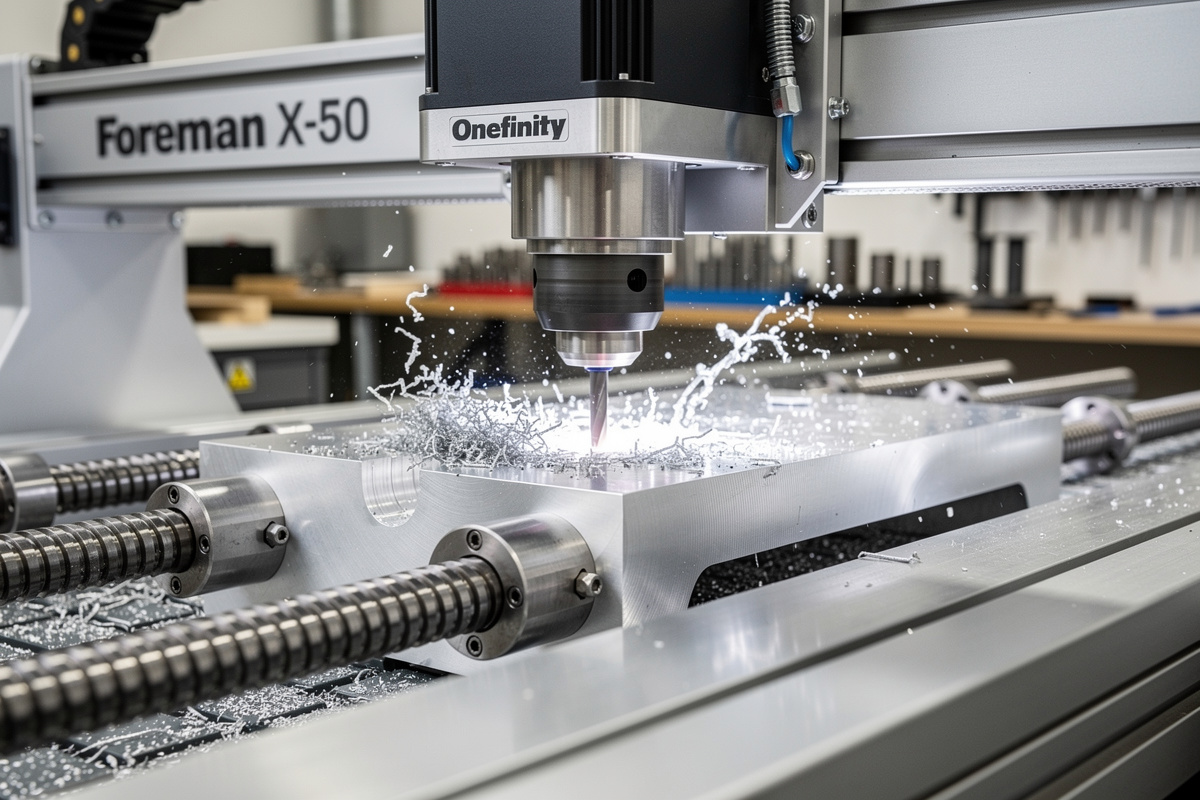
The Foreman X-50 wins on the combination of aluminum capability, price, and wood-CNC versatility. Ball-screw Y-axis (eliminates belt stretch), 80mm spindle mount (accepts true water-cooled spindles), and 1219 × 813mm work area (handles production aluminum batch work). With a 2.2kW water-cooled spindle ($800-1,200 upgrade), the X-50 cuts 6061-T6 aluminum at 3-5mm depths, 3000 RPM, 1500mm/min reliably.
The X-50 is also a capable wood CNC — V-carved signs, hardwood furniture parts, MDF templates all cut excellently. For makers who do 60% wood and 40% aluminum, this is the right machine. Pure aluminum makers should consider dedicated mills (Pocket NC, Tormach). Read more in our Onefinity vs Shapeoko comparison.
Avid CNC Benchtop Pro: Premium Hybrid
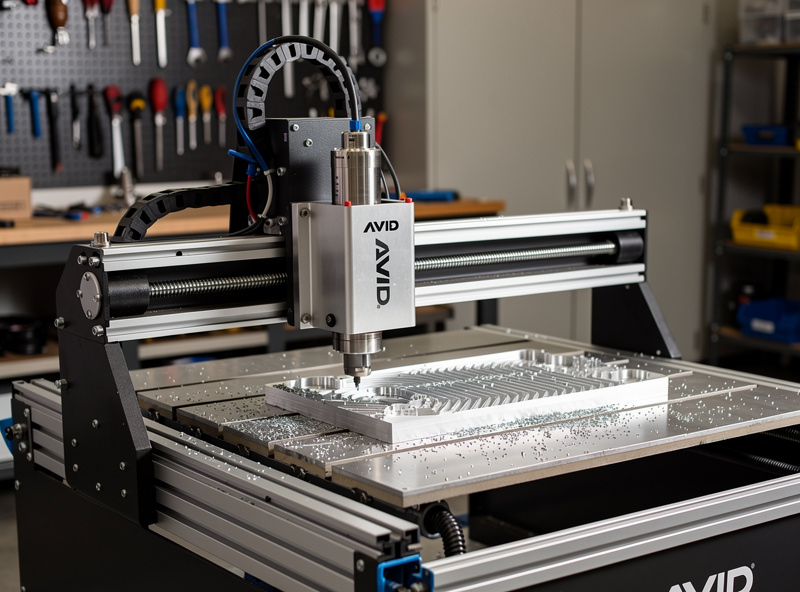
The Avid CNC Benchtop Pro at $5,995 is the premium hybrid — capable of light aluminum production while retaining wood CNC versatility. Aluminum extrusion frame with steel reinforcement, ball-screw drives on all three axes, and a 1219mm cubic work area. Aluminum capability extends to 5-10mm depths in 6061-T6 with proper spindle and feeds.
The Benchtop Pro’s standout feature is build quality — Avid is a US-based manufacturer with industrial-quality components. Customer service is excellent, parts availability is strong, and the long-term reliability is the best in the desktop CNC market. For business users who need a CNC that runs 5-10 years without major issues, the Benchtop Pro justifies its premium.
The catch: $5,995 is significantly more than alternatives. For makers who specifically need premium build quality and US-based support, the Avid is right. For most aluminum-curious hobbyists, the Onefinity Foreman X-50 at $4,599 covers similar capability at $1,400 less.
Pocket NC V2-50: Dedicated 5-Axis Mill
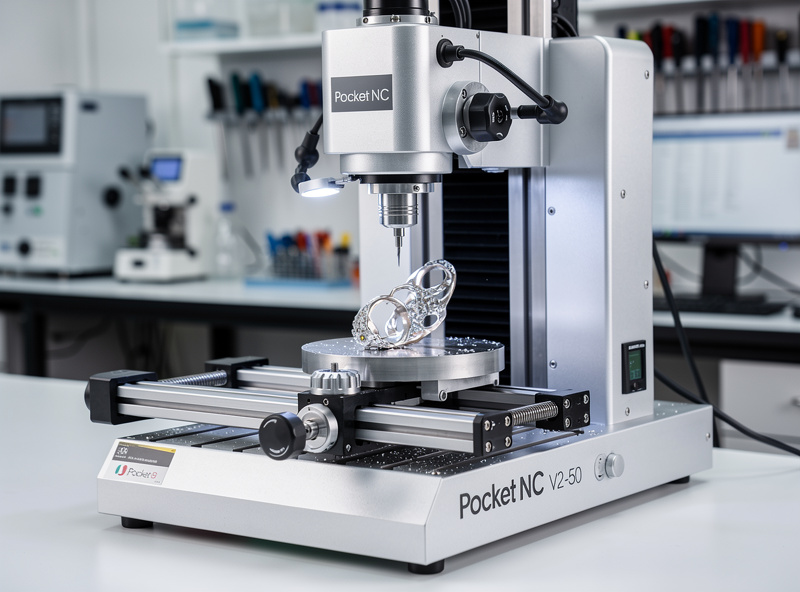
The Pocket NC V2-50 at $4,999 is a dedicated tabletop 5-axis mill — different category entirely from gantry CNCs. 5-axis (X, Y, Z, A-rotary, B-rotary) enables complex aluminum parts that gantry CNCs cannot make. Build envelope is small (114 × 89 × 64mm) but the part complexity is industrial.
For makers specializing in jewelry, knife handles, watch components, or other small precision aluminum parts, the V2-50 is the right tool. For larger aluminum work or wood/MDF work, the Pocket NC is wrong — too small, too expensive, and not designed for sheet material. See our best desktop CNC 2026 for broader market context.
Tormach 1100MX: Industrial Hobby
The Tormach 1100MX at $13,500 is a small industrial mill, not a desktop CNC. Cast iron frame, real precision-ground ways, BT30 tool changer, and 31 × 9 × 19 inch work envelope. Aluminum capability is real industrial-grade — production parts, complex 3D milling, multi-tool jobs.
The 1100MX is the right tool for makers running an aluminum prototype business or a small machine shop. The $13,500 price reflects real industrial capability — comparable to entry-level Haas or Tormach 770M at much lower cost than full industrial machines. For pure hobby use, the 1100MX is overkill.
Why Rigidity Matters for Aluminum
Aluminum machining requires 4-8× more force than equivalent hardwood cuts. A gantry CNC that flexes 0.05mm under hardwood load flexes 0.3-0.4mm under aluminum load. This causes chatter (visible ripples on cut surfaces), broken end mills, and dimensional inaccuracy. Rigidity is non-negotiable for aluminum.
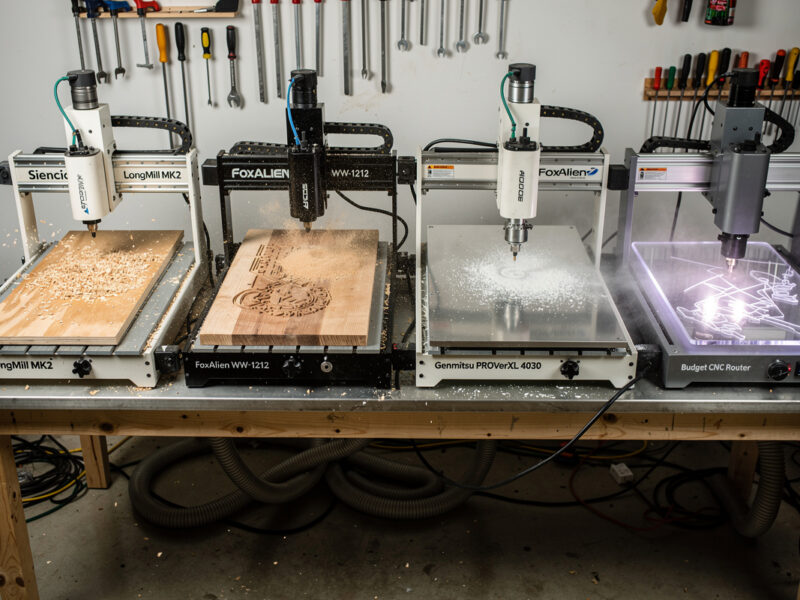
The rigidity hierarchy for aluminum: Tormach 1100MX (industrial cast iron) → Pocket NC V2-50 (dedicated precision) → Avid Benchtop Pro (premium hybrid) → Onefinity Foreman X-50 (capable hybrid) → Shapeoko 5 Pro (light aluminum only) → Sienci LongMill MK2 (very light aluminum) → Genmitsu PROVerXL 4030 (avoid aluminum). Match the machine to the aluminum work depth and production volume.
Spindle Choice for Aluminum
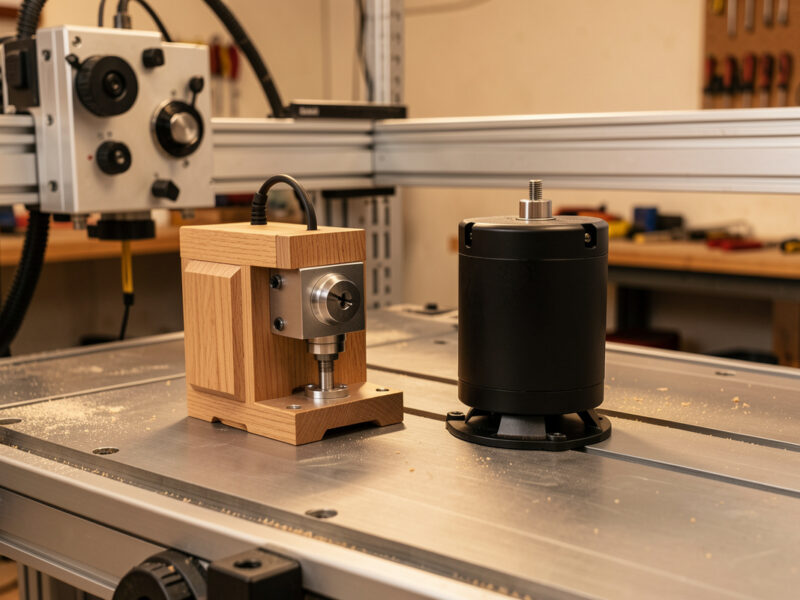
Trim routers (Makita RT0701C, DeWalt 611) included with most CNCs are not ideal for aluminum — fixed RPM (typically 18,000-30,000), no electronic speed control, brush wear at extended use. A water-cooled 80mm spindle is the upgrade — variable RPM 6,000-24,000 controlled via VFD, no brush wear, runs cooler under sustained load. I keep an air-cooled and a water-cooled unit on the bench; for anything past occasional aluminum, the water-cooled one is what survives the long jobs.
For aluminum, spindle RPM matters more than gantry rigidity in some respects. 12,000-15,000 RPM is the sweet spot for most aluminum end mills (1/4 inch and smaller), run with mist or air-blast to stop chips welding to the flutes. Trim routers run too fast (18,000+ RPM minimum), which wears end mills faster. Water-cooled spindles control RPM precisely. Read more on spindle upgrades in adjacent CNC tutorials.
Decision Framework
Budget = $4,599 with mixed work: Onefinity Foreman X-50. Best price-capability balance for hybrid aluminum + wood work.
Budget = $5,995 with premium quality: Avid CNC Benchtop Pro. Best build quality, US-based support.
Budget = $4,999, small precision parts: Pocket NC V2-50. 5-axis dedicated mill for jewelry, watches, complex small parts.
Budget = $13,500+, real production: Tormach 1100MX. Industrial mill capability at hobby pricing.
Budget = under $4,000, aluminum-curious: Onefinity Woodworker + spindle upgrade ($2,500 + $1,000 = $3,500 total). Compromise but capable.
For pure wood work, see our best desktop CNC 2026 covering wood-focused machines.
Frequently Asked Questions
What is the best desktop CNC for aluminum in 2026?
For mixed wood + aluminum work, the Onefinity Foreman X-50 at $4,599 with water-cooled spindle upgrade. For premium build quality, Avid CNC Benchtop Pro at $5,995. For 5-axis precision aluminum, Pocket NC V2-50 at $4,999. For industrial hobby production, Tormach 1100MX at $13,500.
Can the Shapeoko 5 Pro cut aluminum?
Yes, at light depths (1.5-3mm pockets in 6061-T6). The HDZ Z-axis is rigid enough for occasional aluminum work but lacks the rigidity for production volume or deeper cuts. For real aluminum work, the Onefinity Foreman X-50 is the right tool. The Shapeoko is wood-focused with light aluminum capability.
What is the cheapest CNC that can cut aluminum?
The Sienci LongMill MK2 at $1,799 cuts conservative 1-2mm depths in aluminum. Below this, the Genmitsu PROVerXL 4030 cannot machine aluminum effectively. For real aluminum capability, the Onefinity Foreman X-50 ($4,599) is the price floor. Aluminum-capable CNC starts at significantly higher prices than wood-only.
Do I need a water-cooled spindle for aluminum?
For production volume, yes. The water-cooled 2.2kW spindle ($800-1,200) provides controllable RPM (6,000-24,000), no brush wear, and consistent torque for sustained cuts. Trim routers (Makita, DeWalt) work for occasional aluminum but wear faster and lack RPM control. For >5 hours weekly aluminum work, water-cooled spindle is the right investment.
Should I buy a CNC router or a dedicated mill for aluminum?
Depends on volume and complexity. CNC routers (Onefinity Foreman X-50) are versatile — handle wood and aluminum at hobby production volume. Dedicated mills (Pocket NC, Tormach) are aluminum-only but more capable per machine. For mixed shop use, CNC router. For specialized aluminum production, dedicated mill.
What feeds and speeds should I use for aluminum?
For 6061-T6 aluminum with 1/4 inch end mill: 3,000-5,000 RPM, 600-1,200 mm/min feed, 0.5-1.5mm depth-of-cut, 0.05mm chip load. Conservative starting point. Hardened end mills last 5-10x longer than HSS for aluminum. Use coolant or air-blast — chips welding to the mill destroys edges in seconds.
How long do CNC machines last when cutting aluminum?
Properly designed CNCs (Onefinity Foreman X-50, Avid Benchtop Pro) last 5-10 years cutting aluminum at hobby volume. Spindle bearings need replacement at 2,000-5,000 hours of use. Belts/screws have similar service life. The CNC machine outlasts the spindle by 3-5x typically. For dedicated production users, expect spindle replacement once or twice over the machine’s life.