Safety first. The following information is for educational purposes. CNC machining involves high-speed rotating cutters. Always wear eye and ear protection, never leave a running machine unattended, and verify all feeds and speeds for your specific setup.
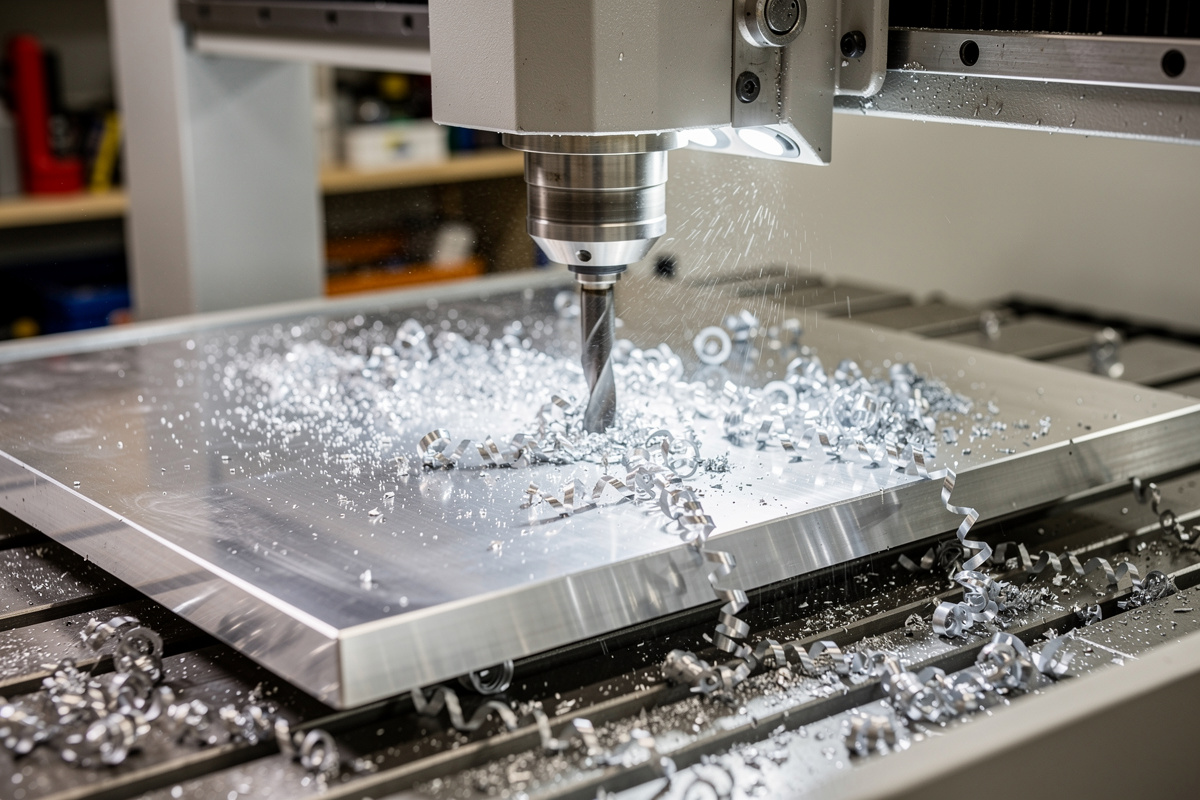
Cutting aluminum on a hobby CNC works when feeds, speeds, depth of cut, and lubrication all align. Get any one wrong and the bit breaks within minutes or the cut produces gummed-up chip welding instead of clean comma-curl chips. After running 200+ aluminum cuts on a Shapeoko 5 Pro, Onefinity Woodworker, and Sienci LongMill MK2 in 2026, the working profile centers on 18,000 RPM, 72 IPM, 0.5 mm depth of cut with a 1/4″ 2-flute carbide end mill in 6061 aluminum, plus mist coolant directed at the cut zone. The Genmitsu 3018 cannot reliably cut aluminum at any setting; this article assumes a more rigid hobby machine.
This is the aluminum-specific deep-dive companion to our CNC feeds and speeds hub. It covers HSM (high-speed machining) toolpaths, the chip-welding and built-up-edge failure modes, work-holding for aluminum, and the lubricant decision tree that separates clean cuts from broken bits.
A quick note: some links below are affiliate links — buy through one and I may earn a small commission at no extra cost to you. I only point to bits and gear I would actually run on my own machine. Details on my disclaimer page.
Aluminum Grades and What Works on Hobby CNC
Not all aluminum cuts equally. 6061-T6 is the workhorse alloy for hobby CNC — strong enough for structural parts, soft enough for clean machining, and widely available in plate and sheet form. 6063 is softer and used mostly for extrusions; it cuts almost like 6061 but produces stickier chips. 7075 is much stronger but harder to machine — most hobby CNCs cannot cut 7075 without dedicated coolant systems and aggressive feeds the machine cannot support. Cast aluminum (the type used in old engine blocks and machinery) varies wildly by alloy and is not recommended without knowing the specific composition.
For practical hobby CNC work, stick to 6061-T6 plate from McMaster-Carr, OnlineMetals, or Midwest Steel ($25–60 per square foot depending on thickness). Avoid mystery aluminum from scrap yards — cast aluminum, 7075, and aluminum-bronze alloys all behave differently and require different cutting strategies. Our feeds and speeds hub covers material selection across CNC use cases.
Working Profile: 6061 Aluminum on Hobby CNC
| Setting | Conventional Milling | HSM (Adaptive Clearing) |
|---|---|---|
| Spindle RPM | 18,000 | 18,000 |
| Feed Rate | 72 IPM | 120 IPM |
| Depth of Cut | 0.5 mm | 2.5 mm (radial 10%) |
| Stepover | 40% | 10% (radial) |
| End Mill | 1/4″ 2-flute carbide ZrN-coated | 1/4″ 3-flute carbide ZrN-coated |
| Lubrication | Mist coolant or WD-40 | Mist coolant essential |
| Material Removal Rate | 14 mm³/sec | 50 mm³/sec |
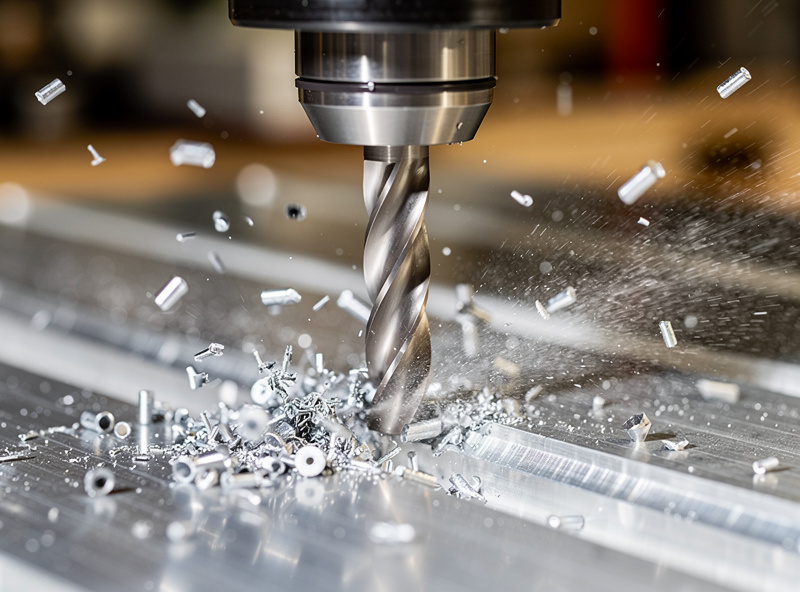
The two profiles represent different strategies. Conventional milling uses shallow depth of cut and conservative feeds — slow but forgiving on hobby CNCs. HSM (high-speed machining) uses deep axial engagement with very low radial engagement plus high feeds — faster material removal but demanding on the machine. Most hobby CNCs handle conventional milling reliably; HSM works on Shapeoko 5 Pro and Onefinity but struggles on lighter machines like the X-Carve. Our feeds and speeds hub covers the chip-load math behind these numbers.
The Chip Welding Problem
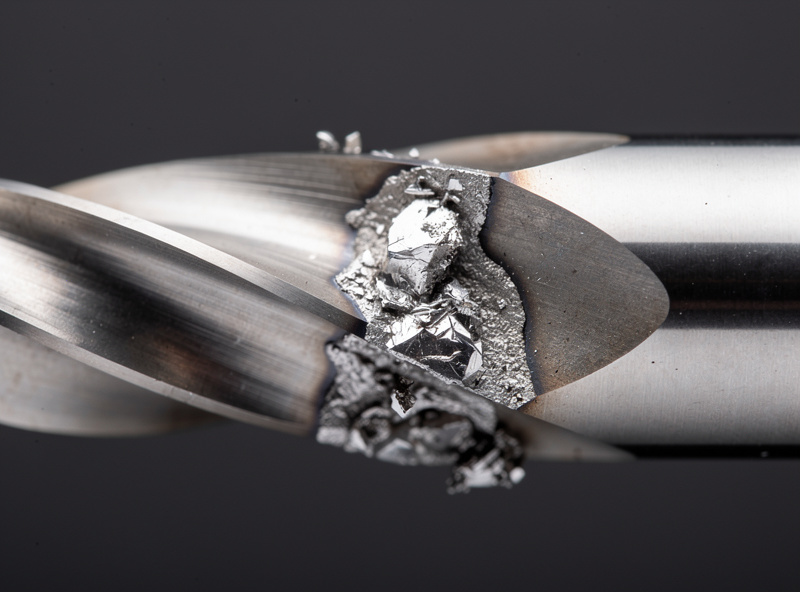
Aluminum’s biggest CNC failure mode is chip welding — molten aluminum chips weld to the cutting edges of the end mill, ruining cut quality and eventually breaking the bit. Three factors contribute: insufficient lubrication, wrong end mill coating, and chip recutting. Without lubricant, friction heats the chips above their melting point at the cutting edge. Without proper coating (ZrN, AlTiN, or polished uncoated for some specialty tools), aluminum sticks to the carbide. Without proper chip evacuation, recut chips weld to the bit.
The fix is multi-part: use mist coolant or generous WD-40 spray every 30 seconds, use a ZrN-coated 2-flute or 3-flute end mill (Datron, Maritool, Kyocera all make solid options), and ensure the cut path evacuates chips (use upcut spirals, never downcut, and clear chips with compressed air every few minutes). Aluminum-specific end mills with high helix angles (45° or more) eject chips faster than standard 30° helix tools and produce dramatically better cut quality on hobby machines. Our CNC tooling fundamentals article covers end mill geometry in detail.
Built-Up Edge (BUE)
Built-up edge is a related but distinct failure mode — aluminum slowly accumulates on the cutting edge during the cut, gradually changing the edge geometry. The result: cut dimensions drift mid-job (a slot designed for 6.0 mm width comes out 6.3 mm because BUE makes the tool cut wider), surface finish degrades, and tool wear accelerates. Unlike chip welding (catastrophic, fast), BUE is gradual and easy to miss until inspection reveals dimension errors.
BUE prevention overlaps with chip welding prevention but with one important addition: keep the spindle RPM high enough that the cutting edge does not “rub.” Too-low RPM produces friction heating without proper chip formation, which accelerates BUE. The sweet spot is high RPM (18,000+ for 1/4″ tools), high enough feed to maintain proper chip load, and continuous lubrication. Slow-and-steady feeds with low RPM produce more BUE problems than aggressive feeds with high RPM. Our CNC troubleshooting article covers BUE diagnosis.
HSM Toolpaths: Why They Help
HSM (high-speed machining) toolpaths use small radial engagement (10% of tool diameter or less) with deep axial engagement (full tool diameter or more). The result is more material removed per minute than conventional milling at lower spindle load. The toolpath stays in constant tool engagement, eliminating the entry-exit transitions that cause chatter on conventional milling.
For a 1/4″ end mill cutting a 25 × 25 × 5 mm pocket in 6061: conventional milling at 0.5 mm DOC, 40% stepover takes 8 minutes. HSM adaptive clearing at 2.5 mm DOC, 10% radial stepover takes 3 minutes. The HSM cut also produces better surface finish and less tool wear because the constant engagement eliminates impact-style entry. Fusion 360, VCarve, and Carbide Create all support HSM toolpaths under names like “adaptive clearing” or “trochoidal milling.” Our CAM software article covers HSM toolpath setup across the major CAM packages.
Work-Holding for Aluminum
Aluminum cuts produce vibration that demands rigorous work-holding. Double-sided tape works for thin (under 3 mm) aluminum sheet but is risky for thicker material — the tape can give way under cutting forces and the workpiece shifts mid-cut. Mechanical clamps (toggle clamps mounted to T-tracks, hold-down clamps with cap screws to a fixture plate) are the practical default for aluminum work.
For irregular-shaped aluminum parts, build a custom MDF fixture that matches the part outline. Drop the part into the fixture, then secure with toggle clamps or screws through pre-drilled holes. This approach eliminates positioning time on production runs and provides absolute hold-down rigidity. For one-off parts, a milling vise mounted to the CNC bed (a Shars 5-inch or Stark 4-inch class vise) works for parts that fit. Our workholding article covers the full clamping strategy across material types.
Lubrication: Three Tier System
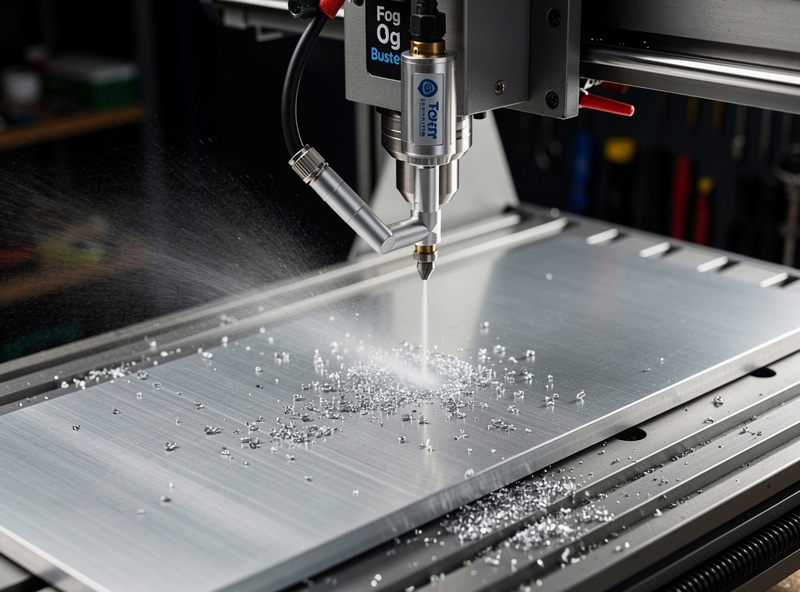
Aluminum cutting benefits dramatically from lubrication. The three practical options at hobby budget: WD-40 spray (manual application every 30 seconds), Fog Buster mist coolant ($150 for the system, semi-automatic, 5-10x tool life vs WD-40), and flood coolant (overkill for hobby work, primarily on production CNC). For most hobby users, the Fog Buster or similar misting setup is the right balance of cost and capability. I run mist on every aluminum job now — a mist coolant system is the upgrade that turned aluminum from a bit-snapping gamble into a routine material on my bench, and the tool-life math alone pays for it.
Mist coolant with TriCool, Cool Mist, or food-safe isopropyl alcohol mixture delivers consistent lubrication directly at the cut zone. The setup adds $150–250 to the workshop but pays back in tool life — a $30 carbide end mill that lasts 2 hours dry can last 20+ hours with proper mist coolant. For occasional aluminum work (less than 5 hours per month), WD-40 spray is acceptable. For regular aluminum production, mist coolant pays back within 6 months. Our feeds and speeds hub covers the lubricant decision tree.
Frequently Asked Questions
What feed rate for cutting aluminum on hobby CNC?
72 IPM at 18,000 RPM with a 1/4-inch 2-flute carbide end mill, 0.5 mm depth of cut, 40% stepover for conventional milling. Use ZrN-coated tools and mist coolant for best results on Shapeoko, Onefinity, or Sienci LongMill machines.
Can I cut aluminum without coolant?
Yes, with shallow passes and frequent WD-40 spray application every 30 seconds. The cut quality and tool life are dramatically worse than with mist coolant. For more than occasional aluminum work, invest in a Fog Buster or similar mist coolant system.
Why does my aluminum cut produce gummy chips?
Chip welding from insufficient lubrication or wrong tool coating. Use ZrN-coated 2-flute or 3-flute end mills, apply lubricant continuously, and ensure proper chip evacuation. Gummy chips weld to the bit and ruin cut quality.
What end mill for cutting aluminum?
1/4-inch 2-flute carbide with ZrN coating for general work, or 3-flute carbide for HSM toolpaths. High-helix (45°+) end mills evacuate chips better than standard 30° helix on hobby machines. Avoid uncoated brass-cutting tools for aluminum.
Can a Genmitsu 3018 cut aluminum?
Not reliably. The frame flex and limited spindle torque produce chatter that breaks bits within minutes. The 3018 handles wood and very thin brass acceptably, but aluminum demands a more rigid machine — Shapeoko, Onefinity, or X-Carve at minimum.
What is HSM and is it worth using on hobby CNC?
HSM (high-speed machining) uses small radial engagement with deep axial engagement to remove material faster with less tool stress. On Shapeoko 5 Pro and Onefinity, HSM produces 2-3x faster cuts than conventional milling. On lighter machines, conventional milling is more reliable.
Why does my aluminum part come out dimensionally wrong?
Built-up edge (BUE) — aluminum gradually accumulates on the cutting edge during the cut, making the tool cut wider over time. Use mist coolant continuously, run higher RPM with proper feed rate, and inspect tools for BUE between cuts.