Safety first. The following information is for educational purposes. CNC machining involves high-speed rotating cutters. Always wear eye and ear protection, never leave a running machine unattended, and verify all feeds and speeds for your specific setup.
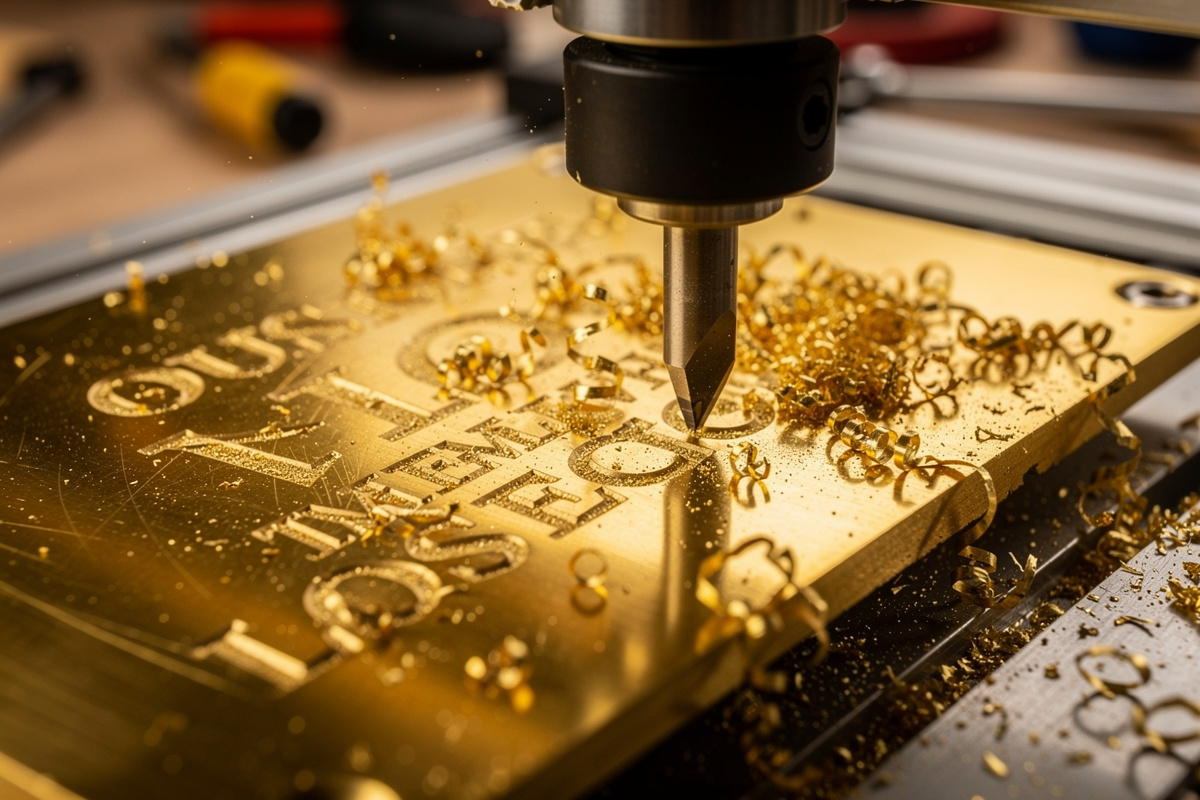
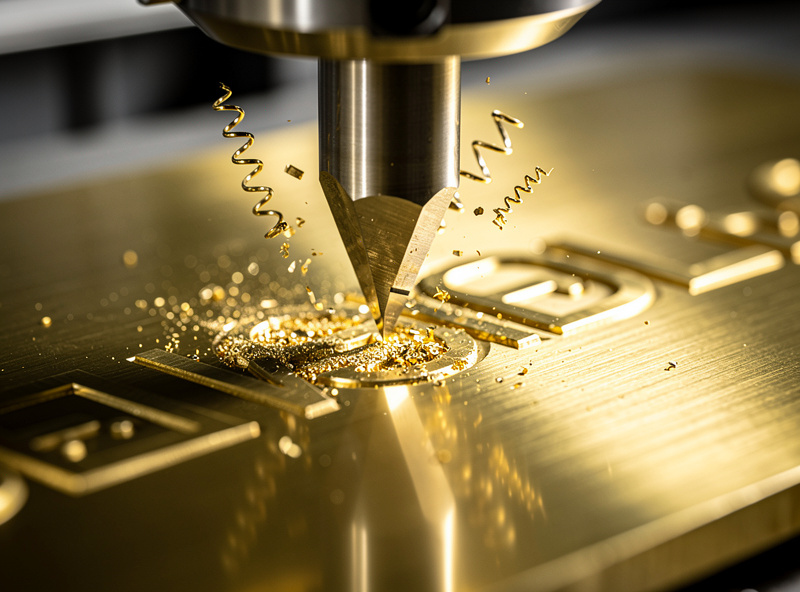
Brass CNC engraving produces clean, professional results that look like commercial trophy plates and signage — at a fraction of the cost. Brass is softer than aluminum but more abrasive than wood, demanding tighter chip control than either. After running 35+ brass engraving jobs in 2026, the working profile centers on a 1/4″ 2-flute carbide end mill at 15,000 RPM, 40 IPM, 0.3 mm depth of cut, with WD-40 lubrication directed at the cut zone. Hobby CNC machines (Shapeoko 5 Pro, Onefinity Woodworker) handle brass cleanly when feeds and depth are kept conservative.
This article covers brass-specific CNC settings, alloy differences (260 vs 360 brass), V-carving for engraved signs, and the lubrication that prevents chip welding. It is the brass companion to our CNC feeds and speeds hub.
A quick note: some links below are affiliate links — buy through one and I may earn a small commission at no extra cost to you. I only point to bits and supplies I would actually run on my own machine. Details on my disclaimer page.
Brass Alloys: 260 vs 360
Two brass alloys dominate hobby CNC work. C260 (cartridge brass, 70% copper / 30% zinc) is softer and tougher, used for cosmetic work where polish matters. C360 (free-machining brass with added lead) cuts dramatically easier, produces cleaner chips, and is the right choice for engraving plates. The lead content makes C360 cut almost like wood — comma-curl chips, no chip welding, easy threading.
For sign and plaque work where engraving quality matters, use C360 free-machining brass from McMaster-Carr or OnlineMetals ($35–60 per square foot for 3 mm sheet). For decorative parts where the finished surface matters more than ease of machining, C260 produces brighter polished results but is harder to machine. Avoid no-name brass alloys from scrap yards — composition varies and some unleaded “ECO” brasses cut very poorly. Our feeds and speeds hub covers material sourcing.
Brass CNC Settings
| Operation | Tool | RPM | Feed (IPM) | DOC | Stepover |
|---|---|---|---|---|---|
| Surface engraving | 60° V-bit | 18,000 | 30 | 0.2 mm | 50% |
| Profile cutting (3 mm sheet) | 1/4″ 2-flute carbide | 15,000 | 40 | 0.3 mm | 30% |
| Pocket clearing | 1/4″ 2-flute carbide | 15,000 | 35 | 0.3 mm | 40% |
| V-carving (lettering) | 60° V-bit | 18,000 | 25 | 0.5 mm | 50% |
| Drilling/holes | Standard drill bit | 2000 | 3 | Through | — |
Brass cuts at lower depth of cut than aluminum because the abrasive zinc content wears tools faster than aluminum at the same depth. Stick to 0.3 mm DOC and accept the slower material removal rate; pushing past 0.5 mm DOC dulls bits within minutes and produces chip welding — I learned that the expensive way on a C260 plate. Apply WD-40 every 30 seconds during the cut for best chip evacuation and tool life.
V-Carving Brass for Trophy Plates
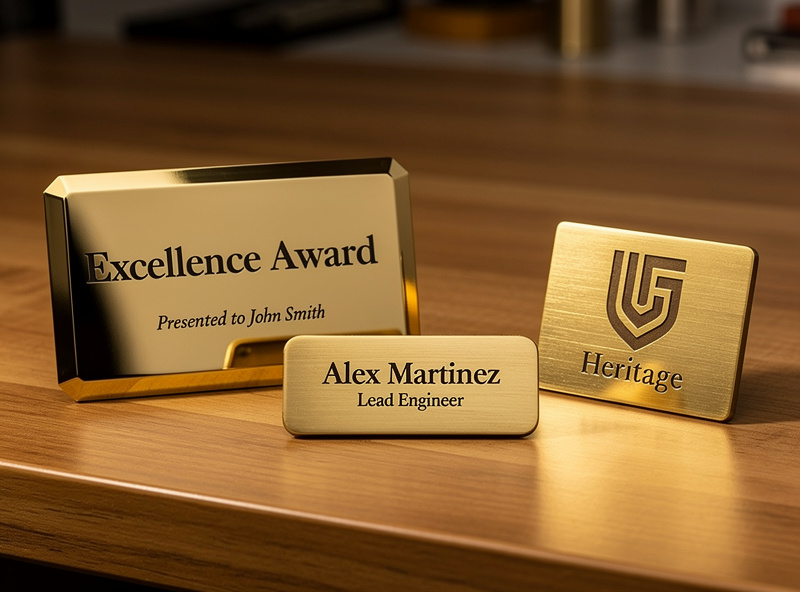
V-carving brass produces the classic trophy-plate look — bright recessed lettering against polished brass background. The technique uses a 60-degree V-bit cutting 0.3–0.5 mm deep, then optionally back-filled with black paint or epoxy for color contrast. The V-bit angle determines how wide the engraving appears at a given depth — 60° produces wider, more visible engravings; 30° produces narrower, more subtle results.
For trophy plate production: design the lettering in VCarve or Carbide Create, set the V-carve toolpath with a 60-degree V-bit, run at 18,000 RPM and 25 IPM. After the cut, fill the recessed lettering with black paint applied with a small brush, wipe excess off the surface with a damp cloth (the paint stays in the recess), allow 24 hours to cure. The result is clean black-on-brass lettering that looks like commercial trophy plates. Our V-carving article covers the toolpath setup in detail.
Lubrication and Chip Welding
Brass produces less chip welding than aluminum but still benefits from lubrication. WD-40 spray applied every 30 seconds during the cut keeps chips ejecting cleanly and reduces tool wear by 3–5x compared to dry cutting. For longer brass jobs (over 30 minutes), a Fog Buster or similar mist coolant system pays back in tool life. The lead content in C360 brass makes it self-lubricating to a degree — pure water spray works adequately, especially for shallow engraving.
Avoid heavy oils and aluminum-specific cutting fluids on brass — they tend to gum up the chips and produce buildup on the tool. Stick to WD-40, mineral oil mist, or food-safe ethanol/water mix for kitchen-related brass parts. The chip evacuation and lubrication strategy is otherwise identical to aluminum CNC work.

Brass Project Ideas
Brass CNC work targets specific high-margin markets. Trophy plates ($8–15 raw cost, $30–60 retail with engraving), name plates and badges ($5–10 raw, $20–40 retail), brass tag systems for kennels and inventory, custom plaques for awards and recognitions, and replacement parts for vintage equipment (brass fittings, decorative hardware). The brass market does not have the volume of acrylic or wood, but per-piece margins are higher.
For volume work, batch-cut multiple identical plate outlines from a single brass sheet, then batch-engrave each piece individually with personalized text. The batch-cut step takes 15 minutes for 12 plates; the per-plate engraving adds 60–90 seconds. The combination supports a $30+ markup per personalized plate with 3-minute total production time per piece. Etsy and direct-to-customer Shopify storefronts handle most retail volume; corporate awards companies are the higher-volume B2B market. Our CNC projects guide covers project economics.
Brass Post-Finishing
Freshly cut brass tarnishes within days as the surface oxidizes. For trophy plates and decorative pieces, apply a clear lacquer (Krylon Crystal Clear, Rust-Oleum Clear) to prevent oxidation. The lacquer coats fast, dries within 30 minutes, and preserves the bright polished brass appearance for years. Without lacquer, brass develops a patina that looks vintage but reduces visual contrast on engraved lettering.
For paint-filled engravings (the trophy plate look), apply paint after the brass surface is fully oxidation-protected. The sequence: cut and engrave, polish the surface lightly with brass polish (Brasso, Bar Keepers Friend), apply clear lacquer, wait 24 hours to fully cure, then fill the engraved areas with paint. Painting before lacquering causes the lacquer to discolor the paint; lacquering before painting prevents this issue. Our CAM software article covers V-carving setup for engraving toolpaths.
Frequently Asked Questions
What feed rate for engraving brass on CNC?
30 IPM at 18,000 RPM with a 60-degree V-bit, 0.2 mm depth for surface engraving. 40 IPM at 15,000 RPM with a 1/4-inch 2-flute carbide end mill, 0.3 mm depth for profile cutting. Apply WD-40 every 30 seconds.
What brass alloy is best for CNC engraving?
C360 free-machining brass. The lead content makes it cut almost like wood with clean comma-curl chips. C260 cartridge brass is softer but harder to machine. Buy from McMaster-Carr or OnlineMetals for verified alloy.
Can a hobby CNC cut brass?
Yes, with conservative settings. Shapeoko 5 Pro, Onefinity Woodworker, and Sienci LongMill all handle brass at 0.3 mm depth of cut and 40 IPM feed rate. Genmitsu 3018 handles thin brass (under 1 mm) acceptably.
Do I need lubricant for cutting brass?
Yes for best results. WD-40 spray every 30 seconds reduces tool wear 3–5x compared to dry cutting. For longer jobs, mist coolant systems pay back in tool life. Avoid heavy oils that gum up chips.
How do I get the trophy plate look on engraved brass?
V-carve the lettering 0.3–0.5 mm deep with a 60-degree V-bit, then fill the recessed text with black paint applied with a small brush. Wipe excess paint off the surface with a damp cloth before it dries.
How do I prevent brass from tarnishing after CNC?
Apply clear lacquer (Krylon Crystal Clear or Rust-Oleum Clear) within 24 hours of cutting. The lacquer prevents surface oxidation and preserves the bright polished brass appearance for years.
Is engraving brass plates profitable?
Yes, high per-piece margins. Raw plates cost $8–15; personalized retail prices average $30–60. The per-plate margin is $20–45 with 3 minutes total production time per piece. Lower volume than acrylic but higher margin.